
Loading…
Loading…
How ERPNext models the supply-process-receive flow — and where India's GST job-work rules (challans, ITC-04) actually fit.
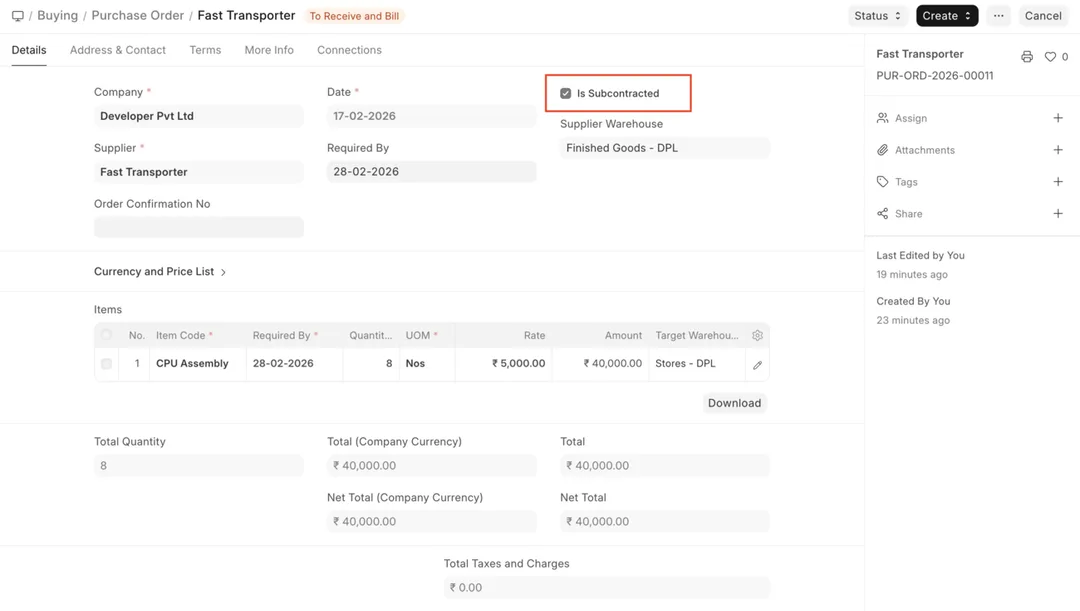
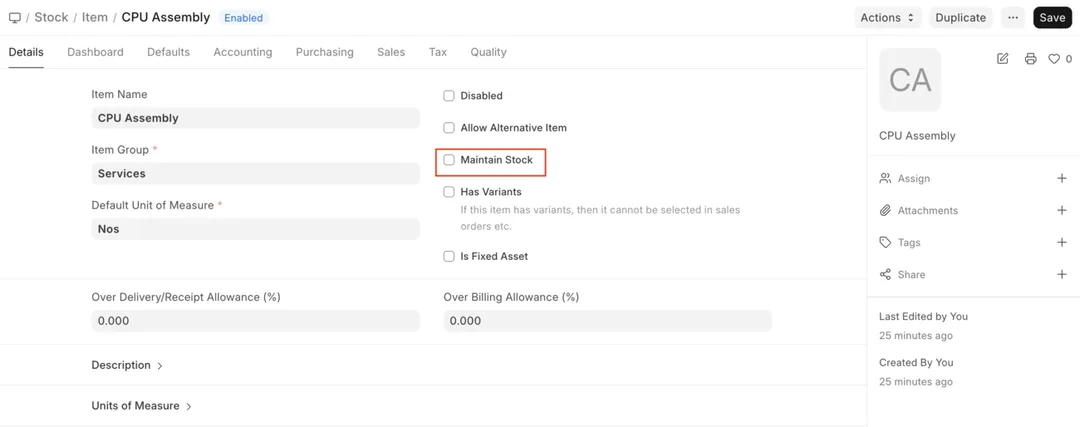
Almost every Indian manufacturer sends work out — cloth to a dyeing unit, castings to a machine shop, tablets to a coating vendor. On paper it's simple: send raw material, get finished goods back. In practice it's where inventory goes dark, valuation drifts, and GST job-work compliance quietly breaks. This paper explains how ERPNext's subcontracting module actually models that flow — the Subcontracting Order, the raw materials you supply, the Subcontracting Receipt, and how the finished good's cost is built from raw material plus the job-work service charge. It then draws the line honestly: core ERPNext runs the operational workflow, while India's GST-specific job-work paperwork — delivery challans and the ITC-04 return — is handled by the separate India Compliance app. The goal is to help you see what the software does for you, what still needs discipline, and where an experienced partner earns their keep.
The complete paper — every section, in a clean branded PDF you can share with your team. Free, no email required.
Core ERPNext runs the subcontracting workflow — supplying raw materials, receiving finished goods, tracking consumption and costing. India's GST-specific job-work paperwork, namely the delivery challans and the ITC-04 return, is handled by the separate, free India Compliance app, which extends ERPNext for Indian GST. They're designed to work together, but they are two distinct things.
Yes. ERPNext transfers the raw materials to a supplier warehouse — a stock location representing goods physically with the subcontractor but still owned and valued by you. Against each raw-material line it tracks required, supplied, consumed and returned quantities, so you always know what's lying at each vendor and what an open order still needs.
On the Subcontracting Receipt, ERPNext builds the finished good's valuation from its true components — the raw-material cost actually consumed, the job-work service charge you pay the subcontractor, and any additional or landed costs like freight distributed across the receipt. That gives a finished-goods value reflecting what the item genuinely cost to make, flowing straight into your stock valuation.
Under GST, goods sent for job work move on a delivery challan and must be brought back within the prescribed windows (inputs and capital goods differ). If material isn't returned in time, the original dispatch can be deemed a supply and attract tax. This is why the returns clock needs a named owner — and why the India Compliance app's challan and ITC-04 tracking, pulling from your ERPNext transactions, matters for staying compliant.
Get a clear plan, an honest timeline, and a fixed scope. Talk to a real expert today — whether or not you work with us.
or write to info@acube.co
Kochi (Kadavanthra & Infopark) · Thiruvananthapuram · across India & overseas · In business since 2011