
Loading…
Loading…
How ERPNext tracks lots and individual units — batches with expiry, serial numbers, and the Serial and Batch Bundle that links every receipt, transfer and delivery — so a recall or audit takes minutes, not weeks.
When a regulator, a customer or a hospital asks "which units came from this lot, and where did they all go?", the answer has to arrive in minutes — not after a week of digging through spreadsheets and delivery challans. This paper explains how ERPNext delivers that traceability at two levels: batches, for material made or received together and often carrying an expiry date, and serial numbers, for individually identifiable units. It then goes under the hood to the mechanism that makes it work — the Serial and Batch Bundle, the document ERPNext attaches to every stock movement so each receipt, transfer and delivery records exactly which lots and units moved, at what quantity and value. From there it covers expiry and FEFO picking, the recall and audit trail you can run in both directions, and the setup discipline that separates a system that answers instantly from one that only looks like it does. The focus is pharma, food and electronics — the industries where traceability isn't a nice-to-have but a legal and safety obligation.
The complete paper — every section, in a clean branded PDF you can share with your team. Free, no email required.
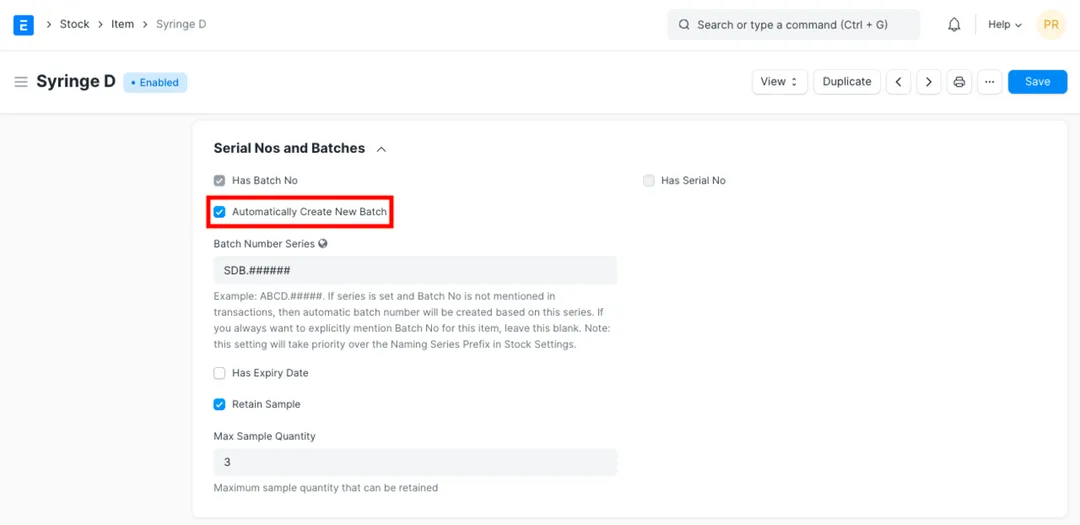
Use a batch (lot) for material made or received together and tracked as a quantity — a production lot of tablets, a mixing batch of food, a reel of components — especially when it carries an expiry date. Use a serial number for units you must follow individually, like a device, instrument or machine, each needing its own warranty, AMC or RMA history. They also nest: a serialised unit can carry a batch number, so you get both the individual unit and its lot. The choice is made per item on the Item master and should be set before any stock moves.
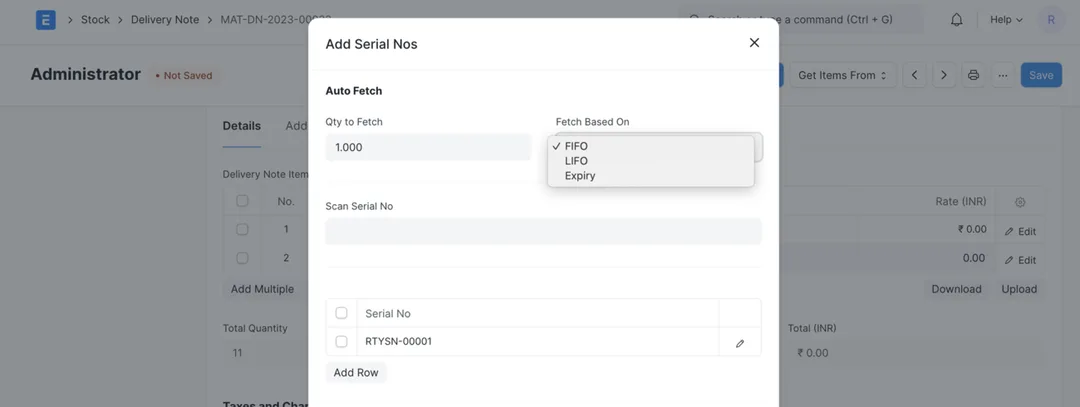
Yes. The expiry date sits on the Batch master, so ERPNext knows the shelf life of every lot in stock. On dispatch it can auto-fetch batches to ship based on a chosen strategy, and Expiry is a built-in option alongside FIFO and LIFO — that's FEFO, proposing the earliest-expiring usable lot first. Serial numbers also carry an Expired status. This is essential for food and pharma, where expired or near-expired stock must be kept out of dispatch by rule, not by memory.
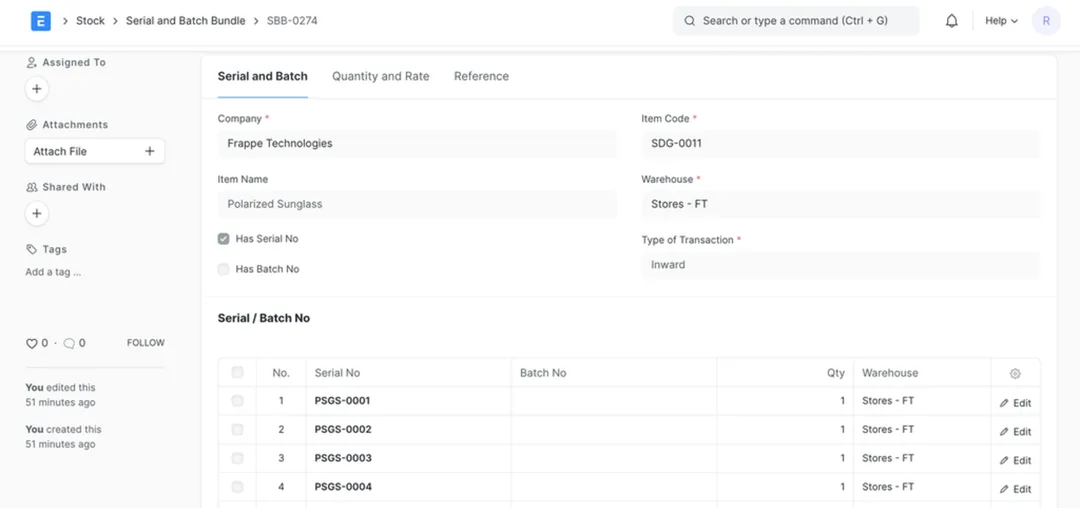
Every movement of a batched or serialised item is written as a Serial and Batch Bundle tied to its source document, so you can trace in both directions. Forward: from a suspect batch or serial number to every Delivery Note and customer that received it — the exact recall scope, no wider than needed. Backward: from a customer complaint or failed unit to its lot, supplier or work order, and every sibling unit from the same lot. Instead of reconstructing history from spreadsheets and challans, you run a query — which is what turns a recall from a week's work into minutes.
ERPNext gives you the core traceability foundation Indian pharma and food operations need — batch genealogy, expiry and FEFO control, per-unit serial history, and a complete two-way audit trail from records that also drive valuation, so the numbers and the genealogy always agree. Sector-specific statutory formats and returns, and any GST paperwork, are handled through India-specific configuration and the India Compliance app rather than assumed by default. The right approach is to design the batch, expiry and serial setup around your regulator's expectations at implementation — which is exactly where an experienced ERPNext partner adds the most value.
Get a clear plan, an honest timeline, and a fixed scope. Talk to a real expert today — whether or not you work with us.
or write to info@acube.co
Kochi (Kadavanthra & Infopark) · Thiruvananthapuram · across India & overseas · In business since 2011