
Loading…
Loading…
How ERPNext turns unpaid sales invoices into short-term finance — and keeps the loan, the bank charges and the settlement honest in your books.
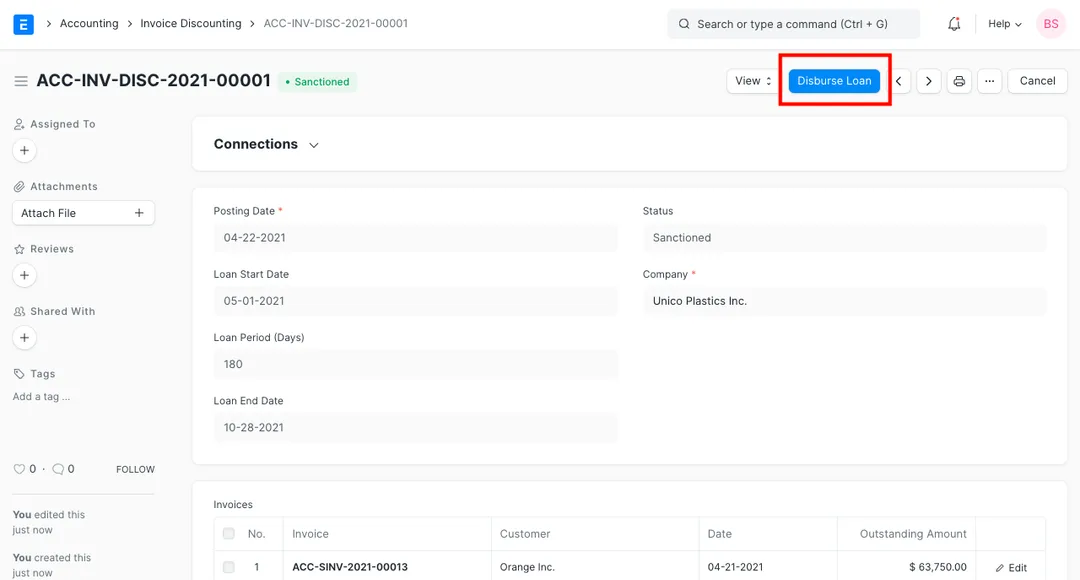
Growing businesses rarely fail for lack of profit — they fail for lack of cash. The money is sitting in unpaid invoices while payroll, suppliers and GST fall due now. Invoice and bill discounting closes that gap: a bank or financier advances cash against invoices your customers haven't paid yet, and you repay when they do. This paper explains what discounting actually is, how ERPNext models it as a first-class accounting document — raising the finance against specific Sales Invoices, booking the short-term loan, splitting off the bank charges, and moving the receivable through its own set of accounts as the facility disburses and settles. It draws the line on what the software does and doesn't do, and where the discipline (and an experienced partner) earns its keep.
The complete paper — every section, in a clean branded PDF you can share with your team. Free, no email required.
Invoice discounting, as ERPNext models it, is financing with recourse: you borrow against unpaid Sales Invoices, the receivable stays on your books, and you carry the risk if the customer doesn't pay. Factoring sells the receivable outright to the financier. ERPNext's Invoice Discounting document keeps the invoices as your assets — moving them between dedicated receivable accounts — and books the advance as a short-term loan you owe, which is the with-recourse treatment.
No. ERPNext models the accounting of a discounting facility — the loan raised, the bank charges, and the receivable movements — regardless of the channel, but it does not integrate directly with TReDS platforms or your bank. You negotiate and transact the facility with the bank, NBFC or TReDS platform, then record it in ERPNext's Invoice Discounting document so the cash, the liability and the discounted invoices are accounted for correctly.
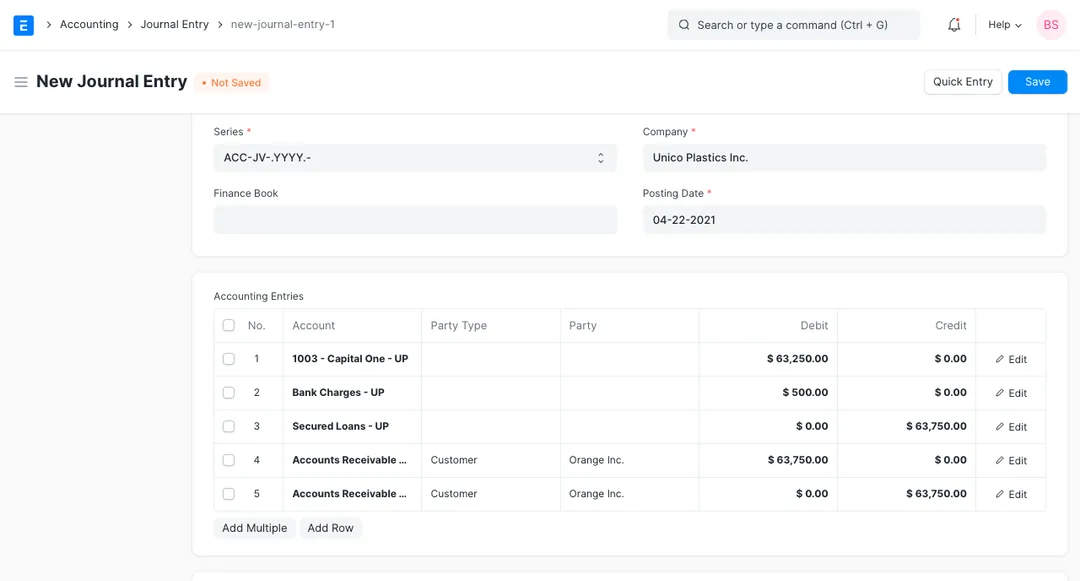
When the loan is disbursed, ERPNext debits your bank account with the cash actually received — the financed amount less the bank charges — debits a separate bank charges account with the fee, and credits the full financed amount to the short-term loan account. So the financier's charge is captured as a distinct expense, and the loan on your books reflects the gross amount you owe, not the net cash you received. You enter the charge as an amount; ERPNext does not compute it from a rate.
ERPNext keeps it traceable. If you close the loan early with invoices still open, or if the loan period lapses with invoices unpaid, the system shifts those invoices from the 'accounts receivable discounted' account into an 'accounts receivable unpaid' account — a scheduled job does this automatically for lapsed facilities. Because the financing is with recourse, those invoices remain your exposure to collect, and the unpaid account is effectively your watch-list of financed invoices that still haven't paid.
Get a clear plan, an honest timeline, and a fixed scope. Talk to a real expert today — whether or not you work with us.
or write to info@acube.co
Kochi (Kadavanthra & Infopark) · Thiruvananthapuram · across India & overseas · In business since 2011