
Loading…
Loading…
How ERPNext's Quality Inspection turns 'we check our stuff' into gates that actually stop bad material — at the goods receipt, on the shop floor, and before dispatch.
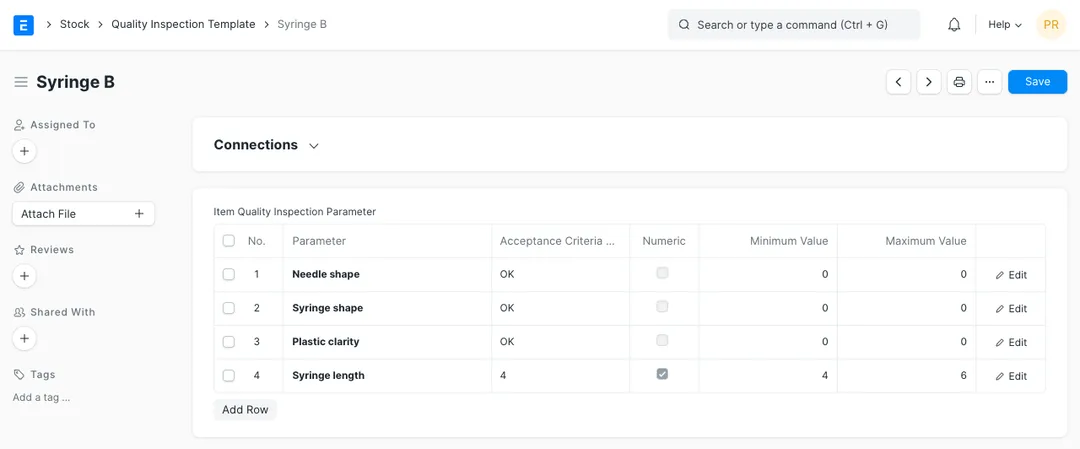
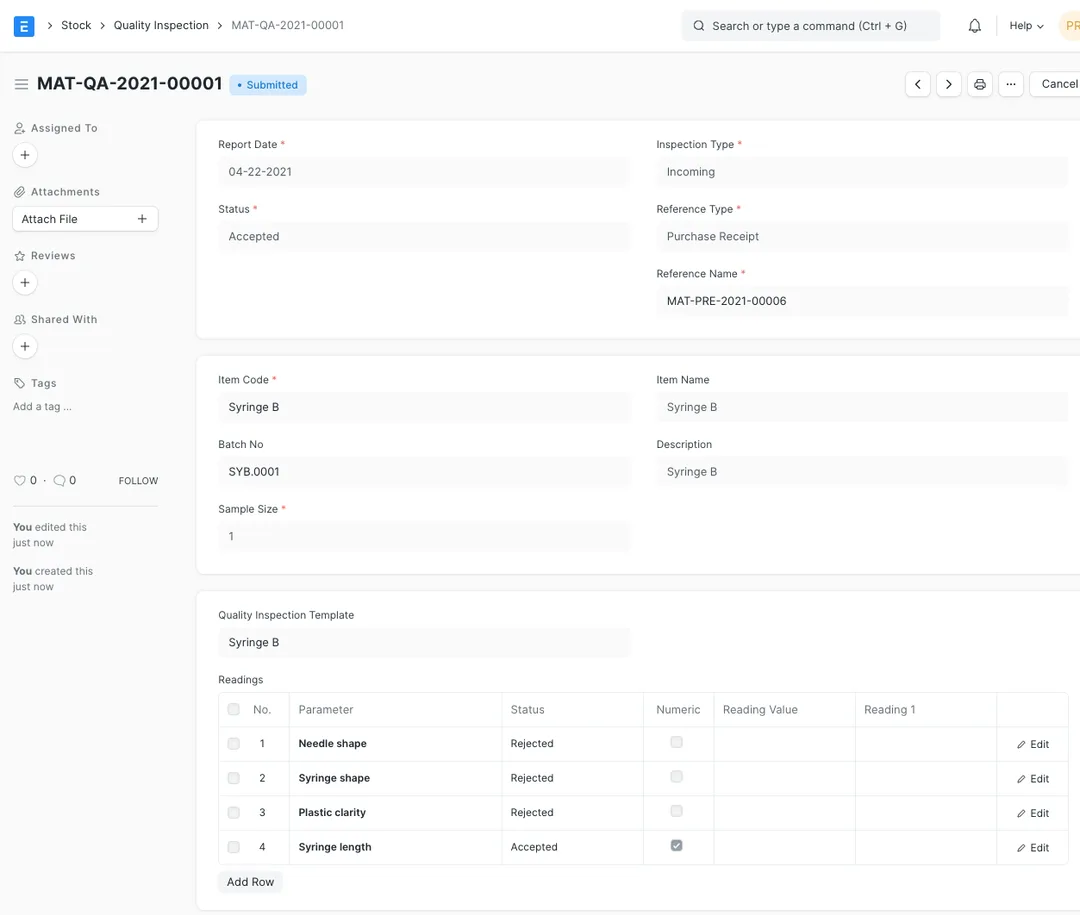
Most factories say they inspect. Fewer can stop a rejected lot from being received, consumed or shipped — because the check lives in a register or a person's head, not in the system that moves the stock. ERPNext's Quality Inspection closes that gap. You define what 'good' means as reusable parameters with real acceptance criteria — numeric tolerances, accepted values, or a formula — group them into a template per item, and then inspect against them at three points: Incoming (goods in), In Process (on the shop floor), and Outgoing (before dispatch). The important part is enforcement: when an item is flagged as requiring inspection, ERPNext will warn you on save and refuse to submit the Purchase Receipt, Stock Entry or Delivery Note until a passing inspection exists — and it blocks outright if the inspection was rejected. This paper explains the real doctypes behind that, how the three gates map to your goods receipt, manufacturing and delivery flows, and what it takes to make the gates actually hold rather than become a rubber stamp.
The complete paper — every section, in a clean branded PDF you can share with your team. Free, no email required.
Yes. When an item is flagged as requiring inspection, ERPNext validates the transaction: it warns you on save if no Quality Inspection is attached, and on submit it becomes a hard stop — the Purchase Receipt, Stock Entry or Delivery Note won't submit without a submitted inspection. If the attached inspection has a Rejected status, the transaction is blocked outright. There's an optional Stock Settings switch to allow inspecting after receipt or delivery for processes that genuinely need it, but by default the gate holds.
Three. Numeric parameters use a minimum and maximum value, so each reading has to fall inside a tolerance band. Value-based parameters use an accepted value the reading must match (for example 'OK' or a grade). Formula-based parameters use a simple Python expression evaluated on the readings — for instance a mean across sample readings above a threshold, or a reading value that must be in a set of allowed grades. That covers 'within tolerance', 'must equal', and 'passes this rule'.
Each Quality Inspection carries a reference type and reference name — a dynamic link pointing at the exact transaction it governs: a Purchase Receipt, Purchase Invoice, Subcontracting Receipt, Stock Entry, Delivery Note, Sales Invoice or Job Card. The transaction line carries the inspection back, so the link is two-way and per row. That's why enforcement can be precise about which check covers which quantity of stock.
No. You choose which items are gated by setting the inspection-required flags on the Item master (before purchase and/or before delivery); unflagged items pass through without an inspection. On each inspection you set the sample size and record the sample readings — ERPNext allows up to ten readings per parameter for value-based sampling — and there's a manual-inspection option for genuine tolerance calls a person has to make. So you can be strict where it matters and light-touch elsewhere.
Get a clear plan, an honest timeline, and a fixed scope. Talk to a real expert today — whether or not you work with us.
or write to info@acube.co
Kochi (Kadavanthra & Infopark) · Thiruvananthapuram · across India & overseas · In business since 2011