
Loading…
Loading…
Every asset — IT kit, warehouse machinery, office infrastructure — tagged, scanned and accounted for in one system, from the day it is ordered to the day it is written off.
Free, no-obligation consult — just a real person.
Official ERPNext Partner
In business since 2011 · 200+ clients
An audit request lands. Somebody needs to know where a specific piece of warehouse equipment is, who signed for it, what it cost, and how much of its life is left on the books. The answer is spread across a procurement system that doesn't talk to anything, a spreadsheet last updated by someone who has moved on, and a printed tag that may or may not still be stuck to the machine. Meanwhile a facility three sites away has raised a fresh order for the same item, because nobody could see the one already sitting idle.
That was the shape of the problem at DSV Global Transport and Logistics, a global leader in logistics and transportation, across its United Arab Emirates operations — thousands of assets spanning IT equipment, warehouse machinery and office infrastructure, managed through fragmented processes: spreadsheets, isolated procurement systems and manual tagging. Traceability suffered, reordering was slow, and field-level coordination depended on phone calls.
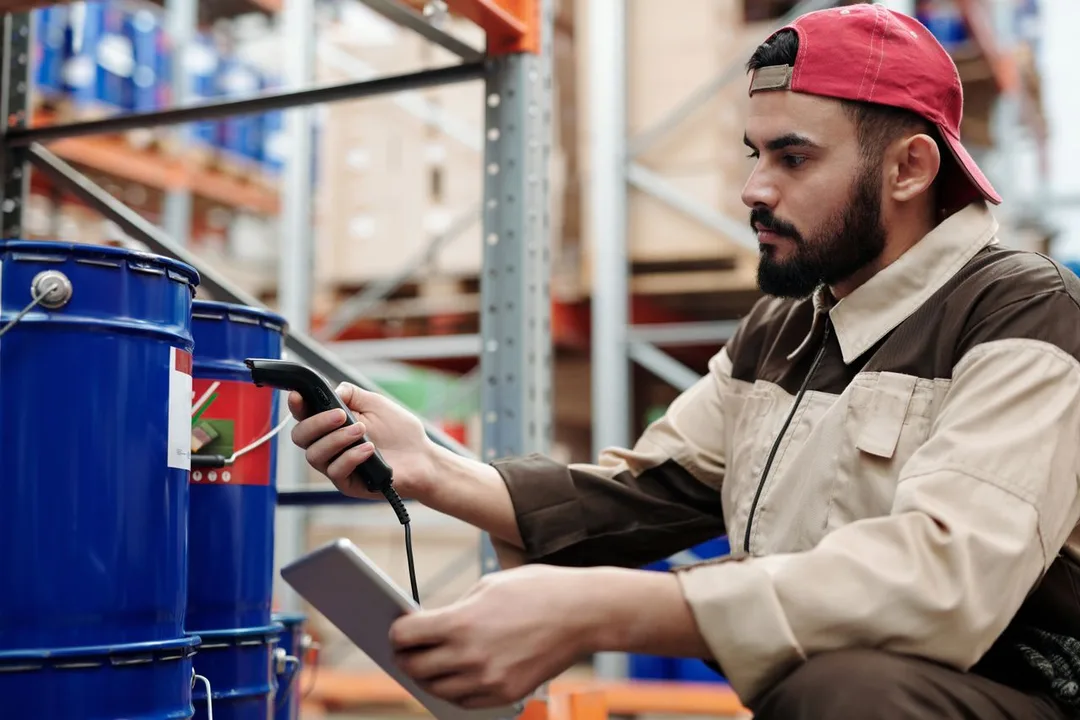
Acube Innovations, an Official ERPNext Partner, built and deployed an ERPNext-based asset management and ordering platform with a custom mobile application for field teams — so tagging, scanning, requesting and tracking all happen at the asset, not back at a desk. Barcode and QR tagging is wired to label printers; ordering runs through approval workflows; and the whole asset lifecycle, from acquisition through utilisation and reordering to disposal, lives in one place.
In business since
Clients served
ERP projects
Work by referral
| Client | DSV Global Transport and Logistics |
| Location | United Arab Emirates |
| Industry | Logistics & supply chain management |
| Engagement | ERPNext asset management & ordering platform with a custom mobile app |
spreadsheets, isolated procurement systems and manual tagging, none of them agreeing with each other.
IT equipment, warehouse machinery and office infrastructure tracked in different places by different teams.
no dependable answer to where an asset is, which department holds it, or what has happened to it since it arrived.
asset requests sat outside procurement, so replacements were late and duplicate orders were easy to raise.
teams at warehouses and offices had to tag, log and request assets away from the asset itself, which is exactly how records drift.
depreciation and asset history had to be assembled by hand each time somebody asked. > The cost of staying as-is: an asset you cannot locate is an asset you buy twice, and an asset register you cannot trust is an audit you have to prepare for from scratch. Across distributed warehouses and offices, both problems multiply with every new site.
A single ERPNext platform for the whole asset lifecycle, extended with a purpose-built mobile app and designed around how field teams actually work — scanning, not typing:
| Capability | What it gives you |
|---|---|
| Asset lifecycle tracking | One register across locations, departments and categories — acquisition, tagging, utilisation, reordering and disposal in a single trail. |
| Procurement-integrated ordering | Asset orders raised inside the same system, routed through approval workflows, so requests, approvals and purchases stop living in separate inboxes. |
| Barcode & QR tagging with label printing | Tags generated and printed from the system itself via label-printer integration, so the physical asset and its record carry the same identity. |
| Mobile app for field teams | Tag, scan, request and track assets on-site at warehouses and offices — the record updates where the work happens. |
| Real-time visibility | Live asset status, stock levels and movement logs, instead of a monthly reconstruction. |
| Depreciation & audit history | Configurable depreciation rules and a full audit history, so compliance reporting comes out of the system rather than out of a spreadsheet. |
| Role-based dashboards | Separate views for IT, admin and finance — each team sees the assets and numbers it is accountable for. |
| UI/UX design | Interfaces designed for gloved hands and quick scans in a warehouse, not for a desk with a mouse — which is why field adoption held. |
See it on your data: Call +91 62358 66111 or WhatsApp us.
Untraceable assets fell 21% and reorder cycle time dropped 45%.
The first number is the one that matters most in an asset operation: a fifth of the equipment that used to go unaccounted for is now findable, because every item carries a tag and every movement leaves a scan behind it. The second is what happens downstream — when a replacement request carries its own approvals into procurement, it stops waiting in someone's inbox.
| Outcome | What it looks like day to day |
|---|---|
| 21% fewer untraceable assets | Tagged, scanned assets with movement logs — location is a lookup, not an investigation. |
| Reorder cycles 45% faster | Asset requests flow straight into procurement with approvals attached, so replacements move instead of waiting. |
| Real accountability | Digital field workflows record who tagged, scanned, requested or moved an asset, and when. |
| Precision and agility in the field | Printer-integrated tagging plus mobile scanning across distributed warehouses and offices. |
| Audit-ready by default | Configurable depreciation rules and full asset history, available on demand. |
| Less downtime | Logistics infrastructure is visible and maintained against a real register, not a stale list. |
The platform now serves as a single source of truth for all asset-related activity — which is what lets DSV's UAE division add sites and equipment confidently, without adding another spreadsheet to reconcile.
We mapped how assets are actually ordered, tagged, moved and retired across warehouses and offices before configuring ERPNext. The system fits the operation; the operation didn't have to bend to the system.
The mobile app and its interface design exist because the person who knows where an asset is standing next to it. Every step that had to be done twice — once on the floor, once at a screen — got collapsed into one scan.
Barcode and QR tagging printed from the same system that holds the record is what keeps physical reality and the register in step over time.
IT, admin and finance each got dashboards scoped to what they're responsible for, which is why the data stayed clean after go-live.
Ongoing ERPNext support means the platform keeps evolving with new sites, categories and compliance requirements rather than freezing on launch day.
in business since 2011, an Official ERPNext Partner, 100+ ERP projects, and 70% of our work comes by referral.
See what it would cost — Answer a few plain questions about how you work, and see a real figure.
Yes. At DSV we ran IT equipment, warehouse machinery and office infrastructure in one register across locations, departments and categories, with movement logs and full asset history. The scale question is usually about how you tag and scan, not about the database.
If your assets live in warehouses and your people are on their feet, a mobile app pays for itself. DSV's field teams tag, scan, request and track assets on-site, so the record updates at the asset instead of hours later at a desk — which is what stops the register drifting.
Tags are generated in ERPNext and printed through integrated label printers, so every physical asset carries the same identity the system holds. From then on, a scan is enough to look up, move, issue or verify it — no manual reference numbers to mistype.
That is exactly how it was built for DSV. Asset orders are raised inside the platform and routed through approval workflows tied to procurement, so a request, its approval and the resulting purchase all sit on the same record.
Yes — configurable depreciation rules and a complete audit history are part of the platform, so finance reporting and audit responses come out of the system rather than being assembled by hand each time.
The underlying build is not country-specific. Any operation running distributed warehouses, depots or offices with equipment that moves between them faces the same traceability and reordering problem, and the same asset-lifecycle platform addresses it.
Always. We move into long-term ERPNext support so your live asset platform stays accurate and keeps pace as you add sites, categories and compliance requirements.
Get a clear plan, an honest timeline, and a fixed scope. Talk to a real expert today — whether or not you work with us.
or write to info@acube.co
Kochi (Kadavanthra & Infopark) · Thiruvananthapuram · across India & overseas · In business since 2011