
Loading…
Loading…
Standard ERPNext does not know about rubber moisture deductions, chitty instalments or irumudi kits. Customisation makes the system speak the working language of Pathanamthitta's trades.
Official ERPNext Partner · 100+ ERP projects · Since 2011
Or call +91 62358 66111
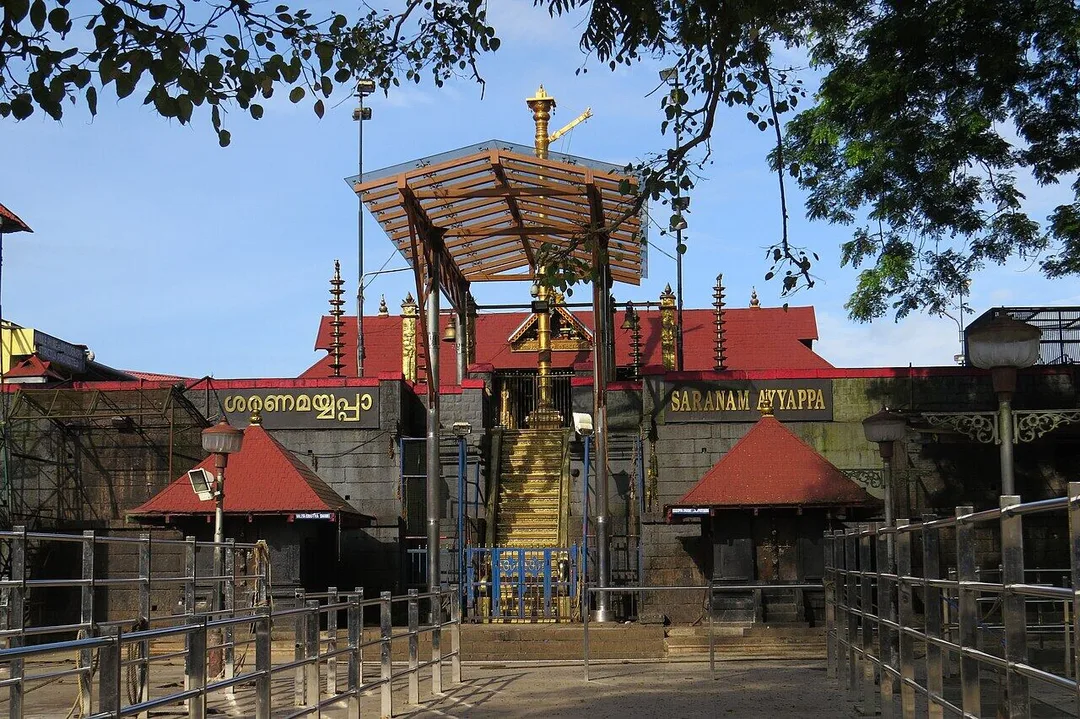
Photo: bhanukhan · Pixabay Content License · via Pixabay
Trusted by 200+ organisations across India & overseas — including






























Yes. We first review the existing setup: version, custom apps, scripts and any changes made directly in core files. Core edits are the usual reason upgrades fail, so we move them into a proper custom app. Then new requirements are built on a clean base.
Not if it is done properly. We keep changes in separate apps, use the framework's own hooks, and avoid touching core code. Before a version upgrade we test your customisations on a copy of your data, so surprises appear on the test site and not in your shop.
Yes. ERPNext supports translations, and print formats can carry Malayalam text for item names, terms or customer-facing receipts. Many Pathanamthitta businesses keep screens in English for accountants and add Malayalam only on documents that growers, members or walk-in customers take home.
After a first conversation about the gap, the process around it and your ERPNext version, we agree the scope and send you a written quotation. The price, the deliverables and the timeline are fixed against that scope before any work starts, so nothing grows without your sign-off.
You speak to someone who does this work, not a call centre. They ask about what the system does not do today, who feels it and how you work around it. If it looks like a fit, we agree the scope and put it in writing, with the timeline, before any work starts. If it does not, we tell you.
Every district has transactions that no packaged software expects. In Pathanamthitta it is the rubber dealer who deducts for wet sheets and pays the grower partly in advance, the Konni timber merchant who buys logs by girth and sells sawn sizes, the Aranmula artisan society that issues alloy to members and takes back finished mirrors, and the builder whose customer pays stage by stage from a Gulf account. People handle these in side registers, and the ERP slowly stops matching reality.
ERPNext customisation closes that gap. On the Frappe framework we add fields, forms, print formats, approval workflows, reports, dashboards and integrations without breaking the upgrade path. The rule we follow is simple: configure first, customise only where the business truly differs, and document every change so that the system can still be upgraded years later.
Case studies

Della Fashions
Della Fashions — ERPNext POS Made Checkout 60% Faster Across Every Outlet

JPC Enterprises
JPC Enterprises — ERPNext Cut Procurement Delays 40% on Offshore EPC Projects

Valiyaveedans Interiors
Valiyaveedans Interiors — ERPNext Halved Quotation Turnaround
When the software cannot record a weight deduction, a stage payment or a commission to a broker, staff keep a notebook. Soon the notebook is the truth and the ERP is a formality. A custom document type or a few fields brings that record inside the system.
An NRI partner reviewing the business from abroad wants three or four numbers, not a trial balance. We build dashboards and scheduled email reports for exactly those figures: grower outstanding, project-wise collection, daily counter sales by branch.
Rubber buyers, government departments and banks each expect documents in a certain form. Custom print formats for weighment slips, stage-wise demand letters, delivery challans and bilingual receipts in English and Malayalam remove daily friction at the counter.
An example
At the artisan society's office in Aranmula, the clerk opens a screen ERPNext did not come with: a job-work issue of copper-tin alloy to one of the member craftsmen, by weight, against his account. On Tuesday the craftsman returns with finished mirrors of three sizes; the clerk records them against the issue, and the wastage between alloy out and mirrors back appears on the same form for the secretary to see. The piece-rate settlement to the craftsman is computed from the sizes returned, less the advance he took before Onam. A buyer from Bengaluru orders two mirrors online; the invoice prints with the GI certificate number and the size, in English, with a Malayalam receipt for the craftsman's own copy. Nothing about this was in standard ERPNext, and nothing about it will break at the next upgrade.
Customisation work starts with a working session at your premises, because the odd cases only surface when we watch a real transaction. After that visit, development happens at our Kochi centre, with changes shown to you on a test site before anything touches live data. For Pathanamthitta clients we club on-site days: one trip for requirement study, another for user testing and training.
Understand the real need. We sit with the people who feel the gap and map the actual process.
Design and fixed scope. A solution design, an honest timeline and agreed deliverables, in writing.
Build the upgrade-safe way. Custom apps, fields and APIs, never core edits, documented and version-controlled.
Test on real data. Validated against your scenarios in a safe environment first.
Deploy and support. Rolled out cleanly to production, then kept healthy under support.
The scope and timeline are agreed in writing before work starts.
Handicrafts and the Aranmula mirror trade
Member-wise issue of alloy and return of finished mirrors as job work, piece-rate settlement to artisans, GI certificate numbers on each sale, and a stock of mirrors by size that the society's office can trust.
Timber trade and sawmills
Log receipts by species, girth and length, conversion to sawn sizes with wastage recorded, cubic-foot pricing on quotations and invoices, and yard-wise stock for Konni's timber merchants.
Agro-based small industry
Farmer-wise procurement screens, batch and expiry tracking for food products, yield reports from raw material to packed goods, and label or barcode printing tied to the batch for units in the Mallappally and Adoor mini estates.
Aranmula Kannadi (metal mirror) artisan cluster, Aranmulacluster
Kerala's first GI-tagged product: copper-tin alloy mirrors made by an artisan society across about 23 units in Aranmula and Mallappuzhassery panchayats.
Kerala's first GI-tagged product, made by a society of about two dozen units; alloy issue, job-work return and GI-numbered sales are exactly the transactions a custom document type is for.
Source: gikerala.inKonni timber trademarket
hill town on the Achankovil known for timber trading and the elephant training centre
Logs bought by girth and sold as sawn sizes need units, conversions and pricing that standard item masters do not carry; a small customisation makes the yard's quotations match its stock.
Source: pathanamthitta.nic.inCo-operative Mini Industrial Estates, Mallappally and Adoorpark
Two one-acre co-operative mini estates, 12 units at Mallappally and 9 at Adoor, mostly micro units, per the DIC 2017-18 survey.
Two one-acre estates of micro units with their own procurement and packing habits; a few added fields and a print format usually replace the side register such a unit keeps.
Source: industry.kerala.gov.inPlaces and organisations are named for local context only. Acube Innovations is not affiliated with or endorsed by them.
Everything about ERPNext Customisation All services in Pathanamthitta
More services in Pathanamthitta
Get a clear plan, an honest timeline, and a fixed scope. Talk to a real expert today — whether or not you work with us.
or write to info@acube.co
Kochi (Kadavanthra & Infopark) · Thiruvananthapuram · across India & overseas · In business since 2011