
Loading…
Loading…
Also serving Madras
Chennai is called the Detroit of India for good reason, and its suppliers live or die by schedule adherence; manufacturing ERP keeps the plan, the material and the floor aligned.
Official ERPNext Partner · 100+ ERP projects · Since 2011
Or call +91 62358 66111
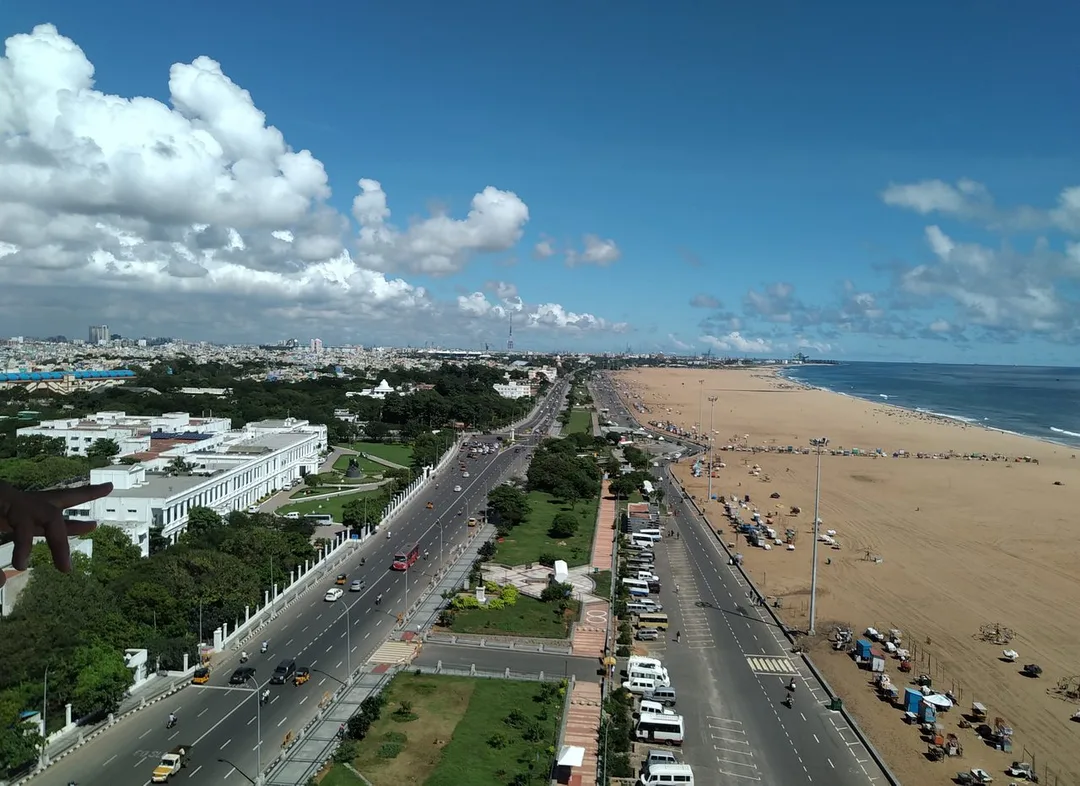
Photo: SlowPhoton · CC BY-SA 4.0, cropped · via Wikimedia Commons
Trusted by 200+ organisations across India & overseas — including





























Automotive & auto components
Multi-level bills of materials, schedule-based planning, operation-wise job cards for press, weld and machining lines, in-process and final inspection with customer-specific parameters, and traceability from dispatched lot to raw-material heat number.
Electronics manufacturing
Bills of materials with alternates and revisions, kitting for assembly lines, serial-number generation at production, test results recorded against each unit, and handling of customer-consigned components without inflating stock value.
Plastics and packaging
Formula and mould-based production for the plastics cluster: mould changeovers planned against orders, regrind and scrap tracked by machine, cycle-time costing per part, and packing-material consumption by pack size.
The factories in and around Chennai work to someone else's clock. Vehicle plants at Oragadam, Sriperumbudur and Maraimalai Nagar issue schedules; the press shops, machining units, plastic moulders and wiring-harness makers of Ambattur, Guindy and Ekkattuthangal deliver against them, several times a day in some cases. Electronics assemblers and MEPZ exporters work the same way. A missed window is remembered at the next sourcing decision.
ERPNext manufacturing gives these units one system for bills of materials, routings, production planning, material requirements, work orders, job cards, subcontracting, quality inspection and costing, connected to purchase, stores and accounts. The planner sees what is needed, by when, and what is short. The owner sees the actual cost of a part against the quoted price. Being open source, it carries no per-user licence fee as the plant adds users.
Case studies

BrahMos Aerospace Thiruvananthapuram Ltd (BATL)
BrahMos (BATL) — Secure, Auditable ERPNext Finance & Procurement

Indus Motor Company Private Limited
Indus Motor — ERPNext Cut Stock-Outs 40% Across Showrooms

Kera Cabs
Kera Cabs — 55% of Bookings Moved Off the Phone and Into the App
The planner arrives early, downloads the customer schedule, checks stock by phone and writes the day's plan in Excel. When the schedule is revised mid-morning, the plan is already stale. Production planning in ERPNext nets demand against stock and open orders and raises material requests automatically.
Parts sent out for heat treatment, plating or powder coating around Madras leave on a challan and return days later, with quantities nobody reconciles. Subcontracting orders track what was sent, what came back, what was rejected and what is still lying with the vendor.
A part quoted three years ago may be losing money today because steel, power and rejection rates have moved. Actual material consumption, operation time and scrap booked on work orders show the current cost per piece, which is what a price-revision discussion needs.
An example
Tuesday's second shift begins at an engineering exporter inside the Madras Export Processing Zone. The supervisor opens the job cards for the shift on a tablet at the line: a batch of machined housings for a European customer, each operation with its planned time. An operator starts the first card, records the quantity as pieces come off the machine, and logs two rejects with the reason. The material request for the next batch, raised by the planner before leaving, has already reached purchase. At the packing table the final inspection is recorded against the lot, the export packing list and invoice are printed from the same records, and the consignment is booked for the container yard on the way to Chennai Port. The owner, at home, sees the shift's output and the actual cost per piece against the quote.
We start on the shop floor. A discovery visit to your Chennai plant follows a part from raw-material receipt to dispatch and notes every register and spreadsheet on the way. Master data and configuration are built in Kochi, with your planner and stores in-charge reviewing weekly. We come back for a conference-room pilot using real orders, then for go-live across the shifts.
Discovery. Your products, bills of materials, routings and how production is planned today.
Blueprint and fixed scope. A clear plan, the deliverables and the timeline, agreed in writing before configuration starts.
Configuration. Bills of materials, work orders, job cards, quality checks and costing.
Data migration. Items, bills of materials and opening stock, including work in progress.
Training, go-live and support. Your team tests on real data, we stand beside you at launch, then support continues under a plan.
The scope and timeline are agreed in writing before work starts.
Yes. Schedules can be imported or entered against blanket orders, and the production plan recalculates requirements when they change. Planning is only as good as the data, so we also fix stock accuracy and bills of materials as part of the project.
Yes. Job cards can be started, paused and completed from a tablet or a shared terminal at the line, recording operator, time, quantity and rejections. Where machines provide counters or signals, these can be integrated through custom work.
Not if it is scoped sensibly. Small Ambattur units often begin with stock, purchase, sales and basic work orders, and add routings and detailed costing later. ERPNext does not charge per user or per module.
After a first conversation about your products, plants and how production is planned and costed today, we agree the scope and send you a written quotation. The price, the deliverables and the timeline are fixed against that scope before any work starts, so nothing grows without your sign-off.
You speak to someone who does this work, not a call centre. They ask about what you make, how production is planned and where costing breaks down. If it looks like a fit, we agree the scope and put it in writing, with the timeline, before any work starts. If it does not, we tell you.
Auto components cluster, Chennaicluster
One of the earliest MSE-CDP clusters in the country, taken up with UNIDO in 2002-03; the district profile puts about 30% of India's automobile industry and 40% of its auto-components industry in and around the city.
The district profile puts a large share of India's auto-components industry in and around the city. Its suppliers need schedule-driven planning, job-work control and traceability to the heat number.
Source: dcmsme.gov.inPlastics cluster, Guindy-Ekkattuthangal-Ambatturcluster
Plastic-processing units spread across the three estates, taken up as an MSE-CDP soft-intervention cluster in 2008-09.
Plastic-processing units across three estates, taken up under MSE-CDP in 2008-09. Mould changeovers, regrind and cycle-time costing are the manufacturing settings that matter here.
Source: dcmsme.gov.inMadras Export Processing Zone (MEPZ), Tambarampark
Set up in 1984 on 265 acres on GST Road south of the airport, converted to an SEZ in 2003; garments, software and engineering make up most of its exports. Sits on the southern edge of the metropolitan area rather than inside the corporation limits.
Set up in 1984 on GST Road, with engineering among its main exports. Units here need production tied to export documentation and container bookings, not just to the shop floor.
Source: en.wikipedia.orgPlaces and organisations are named for local context only. Acube Innovations is not affiliated with or endorsed by them.
Get a clear plan, an honest timeline, and a fixed scope. Talk to a real expert today — whether or not you work with us.
or write to info@acube.co
Kochi (Kadavanthra & Infopark) · Thiruvananthapuram · across India & overseas · In business since 2011