
Loading…
Loading…
Kottayam has designed pages for readers for well over a century; the same care is now owed to the screens its banks, colleges and publishers put in front of people.
Or call +91 62358 66111

Photo: Rison Thumboor · CC BY-SA 4.0, cropped · via Wikimedia Commons
Trusted by 200+ organisations across India & overseas — including

























Developers make software work. Designers make sure it is the right software and that people can use it without help. Design done before development also saves rework afterwards, because a prototype can be changed in an afternoon and finished code cannot.
Yes. A focused redesign of one journey, such as registration or payment, is often the most useful starting point. We audit the existing product, identify where users drop off, and improve that path while keeping the look consistent.
Yes. For products aimed at the Kottayam public we recruit test users who match your audience in age, language and phone type, and run sessions in Malayalam. Watching a handful of such people attempt a task teaches more than any internal review.
After a first conversation about the product, its users and the screens or journeys involved, we agree the scope and send you a written quotation. The price, the deliverables and the timeline are fixed against that scope before any work starts, so nothing grows without your sign-off.
You speak to someone who does this work, not a call centre. They ask about the product, who uses it and where they get stuck. If it looks like a fit, we agree the scope and put it in writing, with the timeline, before any work starts. If it does not, we tell you.
A district that gave Malayalam much of its printing tradition understands that layout decides whether something is read. The same holds for software. A cooperative bank's member app that hides the balance behind four taps, an admission form that fails on a phone, or a news app with text too small for older readers all lose people quietly. Nobody complains. They just stop using it.
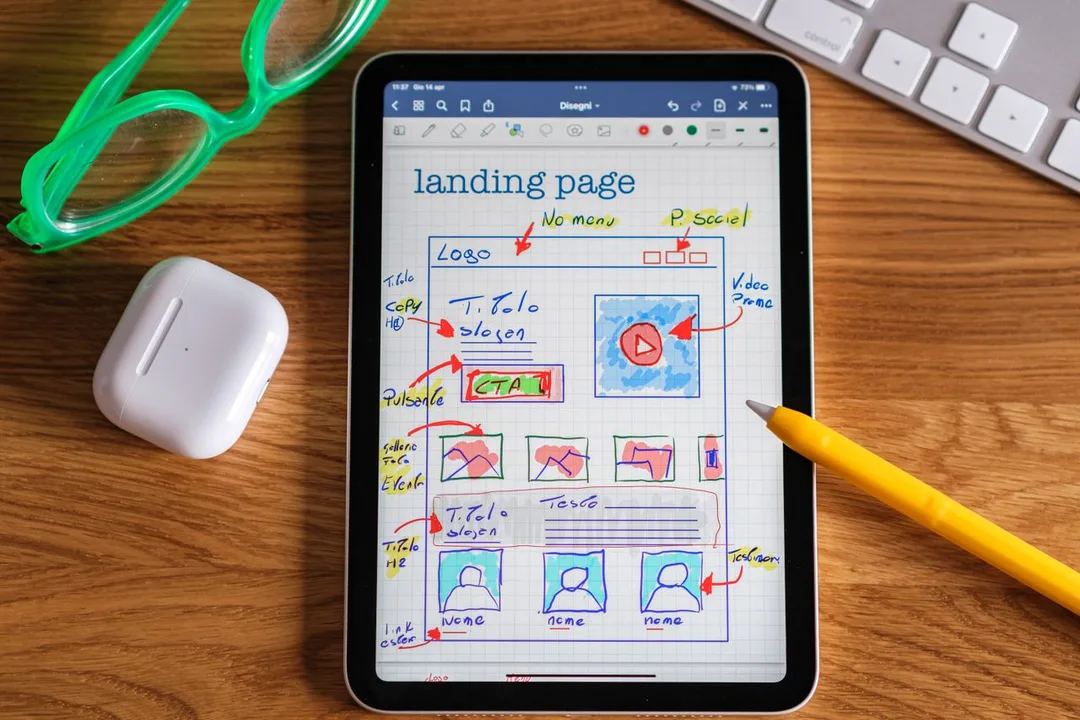
Our UI/UX practice covers user research, information architecture, wireframes, interactive prototypes, visual design, design systems and usability testing. We design for web, Android, iOS and for internal tools such as ERPNext portals and dashboards. The process is evidence-led: we watch real users attempt real tasks, fix what trips them, and hand developers a specification precise enough that the built product matches the design.
Case studies

Queue Off
Queue Off — Digital Payments That Work on a Feature Phone, With No Internet

Cochin Technical College
Cochin Technical College — Custom ERP Cut Admission Processing Time by Over 60%

Competitive Cracker
Competitive Cracker — A Flutter E-Learning App That Scaled to 100K+ Installs
Many local apps mirror the database and ignore the user's task. We redesign around what people come to do, such as pay a fee, check a rate or renew a subscription, and make that path the shortest one on the screen.
Malayalam script needs more line height and different font choices than English, and translated labels are often longer. Interfaces for Kottayam audiences should be designed bilingual from the start, not translated at the end.
Members of cooperatives and readers of newspapers include many people past sixty. Larger type, clear contrast, plain words and forgiving forms are not extras for this audience. They decide whether the product is used at all.
An example
In a society hall near Vaikom a designer sits with a group of screwpine mat-makers and a borrowed phone. Each woman is asked to find her balance and record a delivery on the prototype. The first two cannot find the balance; it is behind a menu icon they do not read as a button. The designer notes it and moves the balance to the first screen. The Malayalam labels overflow their boxes on the smaller phone, so the type and spacing are changed that evening. A member in her sixties asks for bigger numerals and gets them. The next morning the revised prototype is tried again at the society counter, and this time every member finds her balance without help. The developers receive the corrected screens before a line of code is written.
Research is the part of design that cannot be done from a distance, so we come to Kottayam for it: interviews at your branch, campus or reading room, and usability sessions with real users. Design work itself is done in Kochi and shared as clickable prototypes you can try on your own phone. Reviews are weekly, by call or in person.
Discover and research. Your goals, your users and where they struggle today.
Map the flows. Journeys and structure first, so every screen has a job.
Wireframe. Fast, low-fidelity layouts that get the structure right.
Prototype. Clickable, testable prototypes to sign off before development.
The scope and timeline are agreed in writing before work starts.
Publishing and printing
Reading experiences for news and e-book apps, subscription and checkout flows that do not lose the buyer, and editorial tools that let desk staff publish quickly under deadline.
Banking and cooperative finance
Member and customer apps where balances, dues and statements are found at once, loan application forms that can be completed on a phone, and clear staff screens that reduce counter errors.
Education and healthcare
Admission and fee payment journeys for parents, student portals that work on low-cost phones, and patient-facing appointment and report screens for hospitals, designed with accessibility in mind.
Natural fibre and allied products cluster, Vaikomcluster
Coir Board common facility centre (2008-09) for coir and natural-fibre units around Vaikom; a screwpine-mat (thazhappaya) cluster of six societies with several thousand women members is in the same area
Societies with thousands of women members are the audience for a member app: mixed ages, Malayalam-first, small phones, and no patience for a screen that hides the balance.
Source: dcmsme.gov.inErattupetta Municipalitylocal body
Traders and growers in Erattupetta use apps for rates and payments between other work; a screen must show the one figure they came for at once.
Source: kottayam.nic.inGovernment Medical College, Kottayaminstitution
government medical college and hospital (1962) at Gandhinagar-Arpookara, 8 km north of town
A teaching hospital's outpatient volume shows what patient-facing screens face: elderly users, relatives abroad, and forms filled while standing in a queue.
Source: en.wikipedia.orgPlaces and organisations are named for local context only. Acube Innovations is not affiliated with or endorsed by them.
Everything about UI/UX Design All services in Kottayam
More services in Kottayam
Get a clear plan, an honest timeline, and a fixed scope. Talk to a real expert today — whether or not you work with us.
or write to info@acube.co
Kochi (Kadavanthra & Infopark) · Thiruvananthapuram · across India & overseas · In business since 2011