
Loading…
Loading…
Also serving Kasargod
Manufacturing in Kasaragod mostly means processing what the land and coast provide: cashew, coconut, coir, food. For a processor, the ERP question is always outturn.
Official ERPNext Partner · 100+ ERP projects · Since 2011
Or call +91 62358 66111
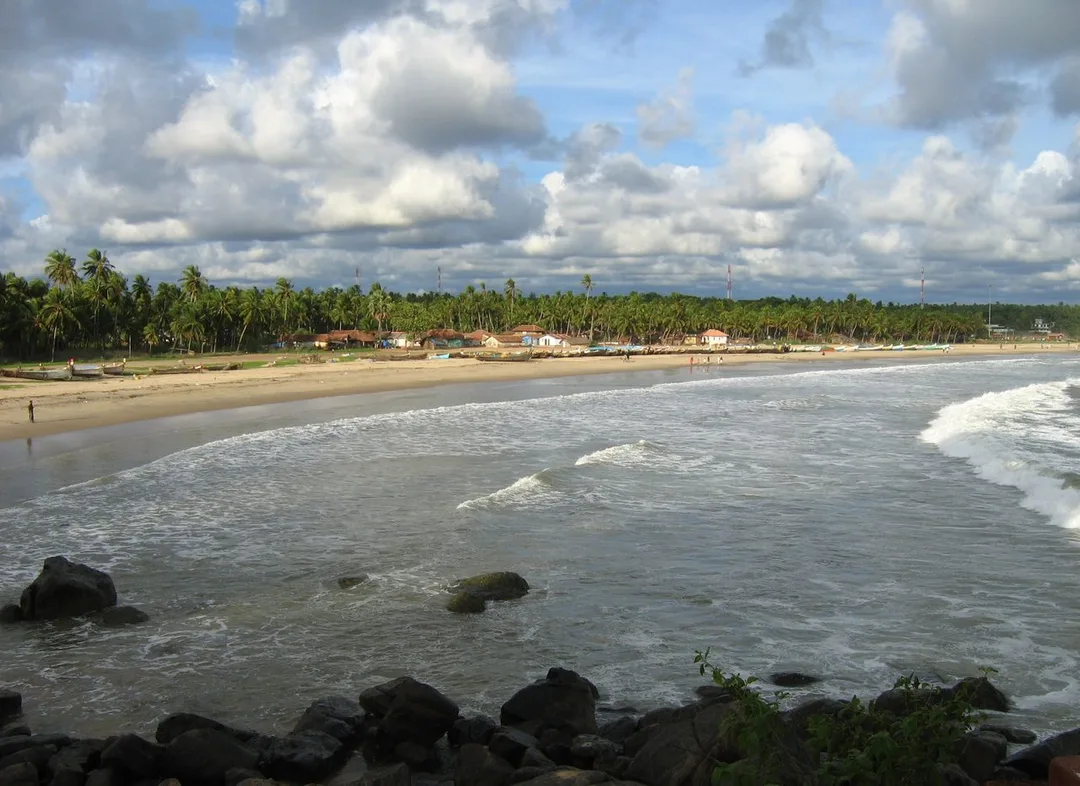
Photo: Vinayaraj · CC BY-SA 3.0, cropped · via Wikimedia Commons
Trusted by 200+ organisations across India & overseas — including






























Cashew processing
Batch-wise movement through drying, shelling, peeling and grading, kernel and broken output recorded by grade, shell and testa realised as by-products, and cost per kilogram built from the lot's own figures.
Coir and agro-processing
Fibre and pith yields per tonne of husk, machine-wise output, and finished goods costed with power and labour, so a product line that looks busy but loses money is identified.
Beedi and small manufacturing
Material issued to workers or job workers, finished pieces returned against agreed wastage norms, and stage-wise output recorded without asking a supervisor to sit at a computer.
A unit here does not assemble parts into a product. It takes a natural input of variable quality and turns it into graded output, some by-product and some waste. The bill of materials is not fixed, the yield changes lot by lot, and the price of the input moves weekly. That is a different problem from discrete manufacturing and it needs a different setup.
Manufacturing on ERPNext covers bills of materials, work orders, job cards, stage-wise production, subcontracting, by-products, scrap, quality inspection and costing, tied to purchase, stock and accounts. For process trades we configure it around batches and yields rather than assemblies, so a processor can see, lot by lot, what went in, what came out and what it cost.
Case studies

BrahMos Aerospace Thiruvananthapuram Ltd (BATL)
BrahMos (BATL) — Secure, Auditable ERPNext Finance & Procurement

Indus Motor Company Private Limited
Indus Motor — ERPNext Cut Stock-Outs 40% Across Showrooms

Kerala State Road Transport Corporation (KSRTC)
KSRTC — ERPNext Courier System Delivered ₹1 Crore in Profit
The season's yield emerges from the annual accounts, long after any decision could have used it. Recording input and output per batch makes outturn a weekly figure, and a bad belt of raw material shows up while there is still buying left to do.
Shell, husk, fibre and dust are sold for real money that lands nowhere in the product cost. Booked as by-products with their own realisation, they reduce the cost of the main output and change which grades are worth producing.
Material sent out for a stage and returned as finished goods is tracked by trust and a phone call. Subcontracting entries record what went, what came back and what was consumed, so a shortfall is a question rather than a suspicion.
An example
A batch finishes on a Thursday afternoon at a unit in the Seethangoli park. The supervisor closes the work order on a tablet at the line: what was issued, what came out by grade, what went to shell and what was rejected. Nobody totals anything by hand. The costing runs that evening and shows the batch a little under the expected outturn, with the shortfall concentrated in one stage. By Monday the owner has three batches to compare from the same raw material belt, and the conversation with his buyer about rate is a conversation about numbers.
We start on the floor, following one product from raw material to despatch and writing down every stage where something is weighed, moved or lost. Bills of materials and yield norms are set from your own records rather than from a textbook. Supervisors are trained at the machine on a tablet, and the first month's costing is reviewed with you line by line.
Discovery. Your products, bills of materials, routings and how production is planned today.
Blueprint and fixed scope. A clear plan, the deliverables and the timeline, agreed in writing before configuration starts.
Configuration. Bills of materials, work orders, job cards, quality checks and costing.
Data migration. Items, bills of materials and opening stock, including work in progress.
Training, go-live and support. Your team tests on real data, we stand beside you at launch, then support continues under a plan.
The scope and timeline are agreed in writing before work starts.
Yes, when it is configured for variable yield. The bill of materials becomes an expectation rather than a rule, and the system records what actually happened against it. The difference between expected and actual is the report a processor wants most.
On a tablet at the line, with a few large buttons: start, output by grade, close. Weighing machines can feed it directly where they support it. Anything requiring typing at the machine gets written on paper instead, and we design around that.
It can be, if the value of knowing your outturn is high, which in this trade it usually is. Small units start with purchase, stock and batch output and leave the rest. What does not suit a dozen workers is a full planning setup nobody uses.
After a first conversation about your products, plants and how production is planned and costed today, we agree the scope and send you a written quotation. The price, the deliverables and the timeline are fixed against that scope before any work starts, so nothing grows without your sign-off.
You speak to someone who does this work, not a call centre. They ask about what you make, how production is planned and where costing breaks down. If it looks like a fit, we agree the scope and put it in writing, with the timeline, before any work starts. If it does not, we tell you.
KINFRA Industrial Park, Seethangoli (Kasargod)park
KINFRA's 270-acre manufacturing park at Seethangoli with 69 units; 14 km from Kasaragod railway station, 58 km from Mangalore airport, 46 km from Mangalore port; park office at Patla village, Maipady
Kasaragod's largest park holds manufacturing units of a size where batch costing and stage-wise production records repay the effort of setting them up.
Source: kinfra.orgMSME manufacturing mixcluster
The state's district industry profile describes the MSME base as agro and food products, readymade garments, wood and furniture, paper products, rubber/plastic, metal-based and general engineering units
Agro and food products, garments, wood, paper, rubber and light engineering all appear here, so a manufacturing setup has to suit small mixed runs rather than one long line.
Source: keralatourism.orgSIDCO Mini Industrial Estate, Kanhangadpark
Kerala SIDCO mini estate at Kanhangad with 12 units
Units in the mini estate often work partly as job workers for larger firms, which makes subcontracting records the first thing worth putting in order.
Source: keralasidco.comPlaces and organisations are named for local context only. Acube Innovations is not affiliated with or endorsed by them.
Get a clear plan, an honest timeline, and a fixed scope. Talk to a real expert today — whether or not you work with us.
or write to info@acube.co
Kochi (Kadavanthra & Infopark) · Thiruvananthapuram · across India & overseas · In business since 2011