
Loading…
Loading…
Also serving Kasargod
Many families here run a processing unit, a shop and a venture abroad at once. Dashboards let the owner see each of them without standing in the building.
Official ERPNext Partner · 100+ ERP projects · Since 2011
Or call +91 62358 66111
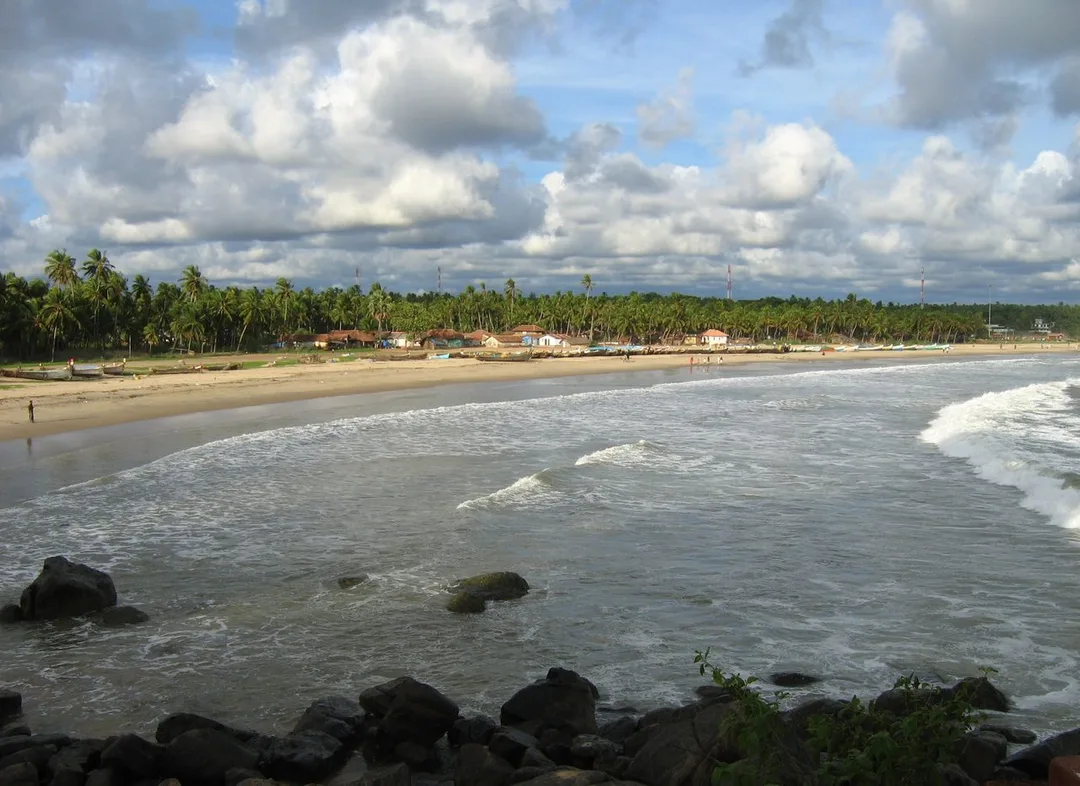
Photo: Vinayaraj · CC BY-SA 3.0, cropped · via Wikimedia Commons
Trusted by 200+ organisations across India & overseas — including






























Cashew processing
Lot-wise outturn against expectation, grade mix by week, shell and husk realisation, and cost per kilogram of kernel tracked through the season instead of computed at year end.
Retail and trading
Branch sales by day and hour, slow-moving lines flagged before the festival stock arrives, and credit customers ranked by outstanding days so collection effort goes where it is overdue.
Coir and agro-processing
Order book against production capacity, buyer-wise realisation after freight, and a simple view of which product lines actually carry the unit rather than merely turning over volume.
The usual reporting system in Kasaragod is a phone call. The owner rings the manager, the manager rings the storekeeper, and by evening a figure arrives that everybody privately adjusts. It works while the business is small and one person is present daily. It stops working the moment there are two locations or an owner overseas.
Business intelligence replaces those calls with a screen. Working from ERPNext data, and other sources where needed, we build dashboards and scheduled reports covering sales, margin, stock, receivables, production output and cash, by unit and in total. They open on a phone, refresh themselves and drill down to the invoice.

Case studies

Indus Motor Company Private Limited
Indus Motor — ERPNext Cut Stock-Outs 40% Across Showrooms

Kerala State Road Transport Corporation (KSRTC)
KSRTC — ERPNext Courier System Delivered ₹1 Crore in Profit

DSV Global Transport and Logistics
DSV — ERPNext Asset Tagging Cut Untraceable Assets 21%
Sales counted one way at the counter and another in the accounts produce two truths and a long argument. A dashboard reading the same ledger everyone posts to ends that, because the number has one definition and one source.
The monthly statement takes three days of somebody's week, which is why it arrives late and stops being produced when work is heavy. Scheduled reports go out on their own, on the day agreed, whether or not anyone is free.
In a trade that turns on a few months, a problem spotted in June is a problem that cost the whole season. Daily intake, yield and rate trends shown while the season runs leave room to change course.
An example
It is half past seven in the Gulf and half past nine in Kasaragod town. The owner opens one screen before leaving for his own work. Yesterday's sales at both shops are there, with the Kanhangad branch behind its usual Wednesday. Stock of one fast line is down to two days. Receivables over sixty days have crept up by the price of a small lorry. He sends three messages, each pointing at a figure both he and the manager can see, and the call that used to take twenty minutes and end in doubt takes four and ends in an instruction.
We start by asking which ten numbers you would want if you could only have ten, because a dashboard of forty is a dashboard nobody reads. Definitions are agreed in writing first. Build is done remotely from Kochi against your live data, then reviewed with you on site and adjusted for a month while people use it in earnest.
Discovery. The decisions you make, the figures behind them and where those figures live.
Blueprint and fixed scope. A clear plan, the deliverables and the timeline, agreed in writing before configuration starts.
Configuration. Dashboards and reports built from your ERP and other sources, with the right access.
Data migration. Your data sources connected and the figures checked against your own reports.
Training, go-live and support. Your team tests on real data, we stand beside you at launch, then support continues under a plan.
The scope and timeline are agreed in writing before work starts.
It is the easiest route, because the data is already structured. Where you run other software or spreadsheets we can still build reporting, though some effort goes into extracting and cleaning first, and we will be plain about that in the estimate.
Yes, as separate companies in one system with a consolidated view on top. Each keeps its own books, currency and statutory reporting, while you see the group position. Access can be set so a manager sees only his own unit.
Permissions follow role and branch, so a branch manager sees his branch, a production head sees output and not margins, and financial detail stays with those you name. Every dashboard respects the same rules as the underlying records.
After a first conversation about the decisions you make, the figures you need and where they live, we agree the scope and send you a written quotation. The price, the deliverables and the timeline are fixed against that scope before any work starts, so nothing grows without your sign-off.
You speak to someone who does this work, not a call centre. They ask about the figures you check every week and where they come from. If it looks like a fit, we agree the scope and put it in writing, with the timeline, before any work starts. If it does not, we tell you.
Kanhangadmarket
the district's second town, a historic port and centre of the cashew growing and export trade; also laterite quarrying
Businesses commonly run one arm here and another in Kasaragod town, so consolidated reporting across two locations is the ordinary requirement, not an advanced one.
Source: en.wikipedia.orgUppala townmarket
the retail and trade hub for the north of the district near the Karnataka border; textiles, jewellery, food and automobile trades
Shops trading across the border compare margin in two tax treatments and two supply routes, which is a comparison no manual monthly statement makes easily.
Source: en.wikipedia.orgSIDCO Mini Industrial Estate, Kanhangadpark
Kerala SIDCO mini estate at Kanhangad with 12 units
Small units here produce plenty of data in their day books and almost no analysis of it, which is exactly where a handful of dashboards changes decisions.
Source: keralasidco.comPlaces and organisations are named for local context only. Acube Innovations is not affiliated with or endorsed by them.
Get a clear plan, an honest timeline, and a fixed scope. Talk to a real expert today — whether or not you work with us.
or write to info@acube.co
Kochi (Kadavanthra & Infopark) · Thiruvananthapuram · across India & overseas · In business since 2011