
Loading…
Loading…
Also serving Bangalore and Bengaluru
Standard ERPNext gets a Bengaluru business most of the way; the print job card, the border-crossing challan and the investor report are where customisation earns its keep.
Official ERPNext Partner · 100+ ERP projects · Since 2011
Or call +91 62358 66111
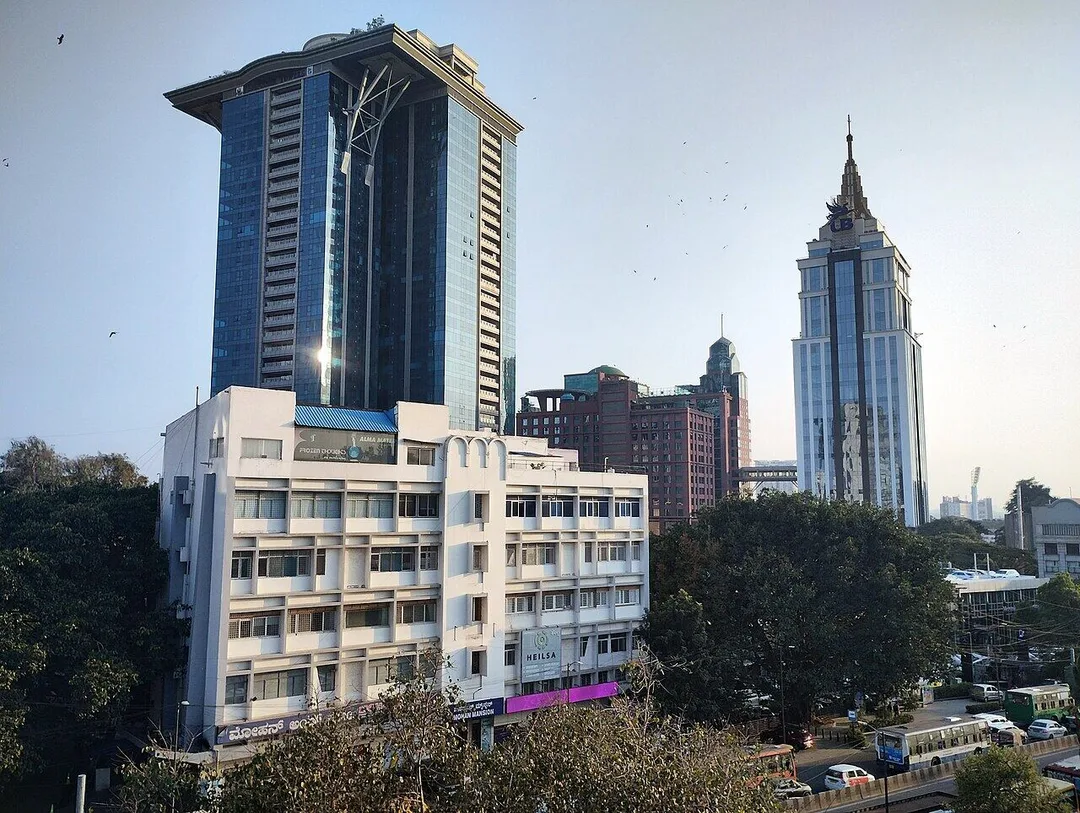
Photo: Gpkp · CC BY-SA 4.0, cropped · via Wikimedia Commons
Trusted by 200+ organisations across India & overseas — including






























Printing and packaging
A job-card doctype with size, stock, colours, finishing and plate charges, priced from a rate card, converted to a sales order and costed against actual paper and press time for the presses of Chamarajpet and Chickpet.
Engineering units on the state border
Custom dispatch flows for units in Attibele and Kumbalgodu that send job work and finished goods across state lines daily: challan formats, e-way bill fields defaulted from the route, and transporter records on every consignment.
Startups and SaaS
Subscription plans, usage-based invoices, deferred revenue schedules and a customer portal built on ERPNext's subscription and accounting modules, so a funded company's billing and its books are the same record.
A printing press in the Chamarajpet cluster prices every job by size, stock, colours and finish, and no standard sales order captures that. An engineering unit in Attibele ships across the Tamil Nadu border every day and needs its e-way flow to match. A SaaS startup in HSR Layout bills by usage and recognises revenue month by month. ERPNext covers the common ground; the Frappe framework lets the rest be built properly.
Customisation at Acube means custom doctypes and fields, workflows with role-based approvals, print formats, script reports and dashboards, and API integrations with the tools you already pay for. We build changes as a separate app on top of ERPNext, so version upgrades do not wipe them out. In Bengaluru, where teams change quickly, the simplest build is the one that survives.

Case studies
Purchase requests, discounts and expense claims get approved on WhatsApp and nobody can find the trail at audit time. A workflow routes each document by amount or cost centre, records who approved it and when, and blocks the next step until it is done.
Founders spend the first week of every month assembling investor numbers from exports. Script reports draw recurring revenue, burn, receivables and headcount cost from live ledgers, so the pack is a saved view rather than a fresh project.
Payment gateways, storefronts, attendance devices and bank files are moved into the books by upload. We connect them through the ERPNext REST API or scheduled jobs, with error logs a finance executive can read, so yesterday's orders are in the ledger this morning.
An example
A press in the old-city printing cluster takes a Tuesday-morning order for wedding cards from a dealer in Chickpet. The counter clerk opens the custom job card: card size, board weight, four colours, foil on the front, and the quantity. The rate card prices it, the customer's usual credit terms come across, and a sales order is created in one step. The press supervisor sees the job in his queue with the plate and paper requirements already listed, and the stores issue the board against it. When the job runs late, the workflow escalates to the owner before the dealer rings. At dispatch the delivery note prints in the format the dealer's accountant expects, and the actual paper and press time are already costed against the quote.
We scope customisation for Bengaluru companies over calls and screen shares, because the person who knows the process is usually the busiest in the building. Where a change touches a press floor or a dispatch bay, we plan a visit from Kochi to watch it being used. Builds go to a staging site first; your team tests there, signs off, and only then does it reach the live system.
Understand the real need. We sit with the people who feel the gap and map the actual process.
Design and fixed scope. A solution design, an honest timeline and agreed deliverables, in writing.
Build the upgrade-safe way. Custom apps, fields and APIs, never core edits, documented and version-controlled.
Test on real data. Validated against your scenarios in a safe environment first.
Deploy and support. Rolled out cleanly to production, then kept healthy under support.
The scope and timeline are agreed in writing before work starts.
Yes, if built the right way. We keep changes in a separate custom app and avoid editing core code, so an upgrade replaces the core and leaves your work in place. Before any upgrade we test your customisations on a copy of your data.
Yes. We begin with a short review of what has been changed, how, and what state the data is in. Many Bangalore companies come with a system that works but was modified in the core; we tidy that first so later work is safe.
In most cases. ERPNext has a documented REST API and webhooks, and most modern tools offer the same. Storefronts, payment gateways, biometric attendance and banking formats are common connections. If a tool has no API, we say so and suggest a file-based route.
After a first conversation about the gap, the process around it and your ERPNext version, we agree the scope and send you a written quotation. The price, the deliverables and the timeline are fixed against that scope before any work starts, so nothing grows without your sign-off.
You speak to someone who does this work, not a call centre. They ask about what the system does not do today, who feels it and how you work around it. If it looks like a fit, we agree the scope and put it in writing, with the timeline, before any work starts. If it does not, we tell you.
Printing cluster, Chamarajpet and Chickpetcluster
Printing-press cluster in the old city (Chickpet/Chamarajpet) taken up under MSE-CDP from 2006-07, with a Common Facility Centre in the DC-MSME list.
An MSE-CDP cluster with a common facility centre, where every job is priced by size, stock, colours and finish; a job-card doctype is the customisation that makes ERPNext fit a press.
Source: dcmsme.gov.inAttibele Industrial Area (KIADB)park
About 250 acres on the Karnataka–Tamil Nadu border in Anekal taluk, next to Hosur; one of the cluster of Anekal-taluk estates with Bommasandra, Jigani and Chandapura.
About 250 acres on the Tamil Nadu border next to Hosur, where units send job work and dispatches across state lines every day and need dispatch and e-way flows built for that route.
Source: dcmsme.gov.inKumbalgodu Industrial Area (KIADB, Stages I–II)park
About 218 acres on Mysore Road in Bengaluru South taluk, the district's main estate on the south-west exit of the city.
The district's main estate on the Mysore Road exit; its units trade heavily with Mysuru and Mandya and want transporter, route and consignment fields defaulted rather than typed.
Source: dcmsme.gov.inPlaces and organisations are named for local context only. Acube Innovations is not affiliated with or endorsed by them.
Everything about ERPNext Customisation All services in Bengaluru Urban
More services in Bengaluru Urban
Get a clear plan, an honest timeline, and a fixed scope. Talk to a real expert today — whether or not you work with us.
or write to info@acube.co
Kochi (Kadavanthra & Infopark) · Thiruvananthapuram · across India & overseas · In business since 2011