
Loading…
Loading…
Also serving Palghat
A full load arriving from Coimbatore leaves a Palakkad godown as two hundred small ones. What happens in between decides whether the month pays for itself.
Official ERPNext Partner · 100+ ERP projects · Since 2011
Or call +91 62358 66111
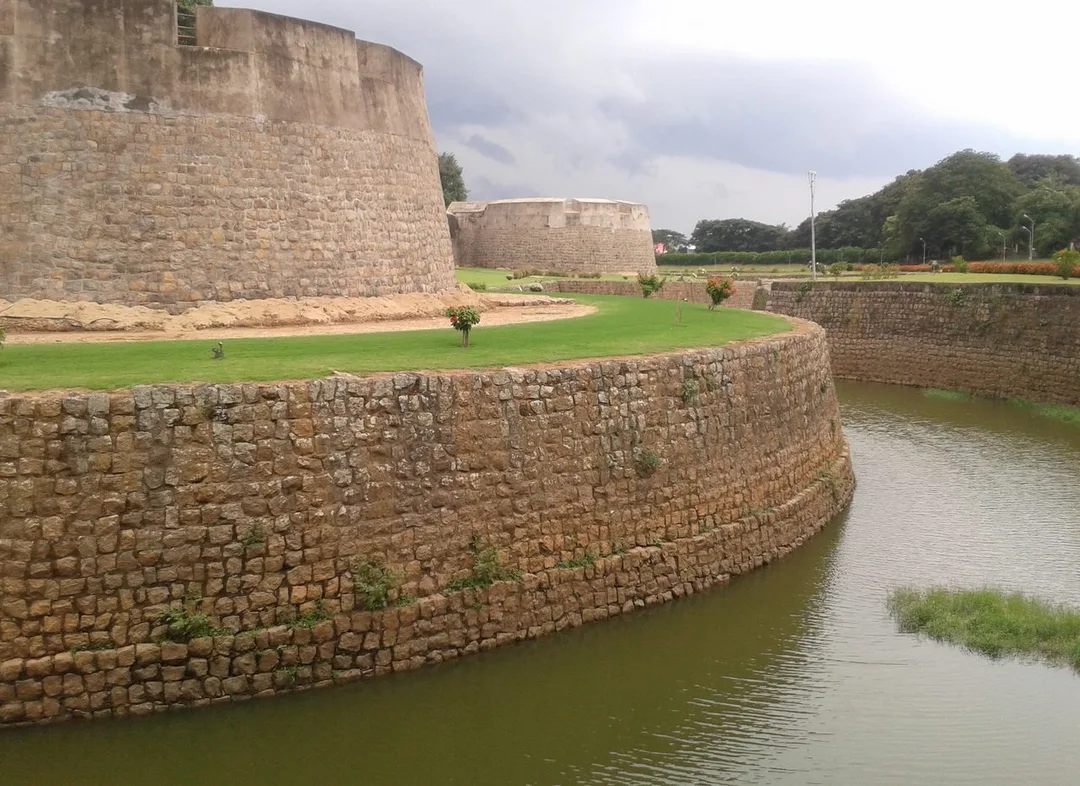
Photo: Vis M · CC BY-SA 4.0, cropped · via Wikimedia Commons
Trusted by 200+ organisations across India & overseas — including


























Palakkad wholesalers sit at a natural break in the chain. Consumer goods stockists take full loads from depots in Coimbatore and Kochi and supply shops from Pattambi to Kollengode. Provisions and rice wholesalers on the town's market street serve retailers and caterers. Fertiliser, seed and pesticide dealers work a selling season counted in weeks. Parts distributors serve the workshops strung along the highway.
ERPNext for distribution runs the whole cycle: purchase with schemes and free goods, batch and expiry-wise stock, price lists by customer class, orders taken on a salesman's phone, van loading and delivery, GST invoicing with e-way bills, credit limits enforced at order entry, collections, and claim statements against principals. Several godowns and branches sit on one database, so the owner can see stock, dues and route performance without ringing anyone.

A principal announces a scheme, the distributor passes it on, and the claim is reconstructed weeks later from invoices. Much of it is never filed, and part of what is filed comes back rejected for want of proof. Schemes defined once apply on the invoice and build into a claim statement with the bills attached.
Salesmen extend a little more to keep a counter friendly, and the owner learns of it when a shop shuts. A limit and an overdue check applied at order entry, with a named person allowed to override, plus a collection list by beat each morning, keeps receivables where they can still be chased.
An agri-input dealer who buys heavily for sowing carries it for a year. Item and season-wise sales history, read against open orders and stock in hand, sizes the purchase, and an ageing report pushes the slow lines out while farmers are still buying.
Case studies

EVM Wheels (part of the EVM Group)
EVM Wheels — 70% of Self-Drive Rentals Now Book Themselves Through the App

Dumas Bakes N Meals Private Limited
Dumas Bakes N Meals — ERPNext Lifted On-Time Deliveries by Over 40%

Kerala State Road Transport Corporation (KSRTC)
KSRTC — ERPNext Courier System Delivered ₹1 Crore in Profit
An example
The van is loaded against the orders its salesman booked yesterday on his phone, and the picking list is sorted in delivery order, last shop first. At the second stop the shopkeeper wants to add a case; the salesman checks his outstanding on the screen, sees the limit is clear and adds it. At the fourth, the amount owing is past the agreed days, so the order holds until a payment is entered, and the collection is receipted on the spot. By the time the van turns back towards town, the godown already knows what went out, what came back as damage and what the route earned.
A distribution go-live is planned around your slowest week. We travel from Kochi to watch order taking, godown picking and delivery, then load items, price lists, schemes and customer balances with your own staff. Salesmen are trained on their own beats with the ordering app. On the first live day we are in the godown. Afterwards support is remote and quick, because a distributor cannot wait until Monday.
Discovery. Your customers, price lists, routes, warehouses and how orders are taken.
Blueprint and fixed scope. A clear plan, the deliverables and the timeline, agreed in writing before configuration starts.
Configuration. Price lists, schemes, sales orders, delivery, credit limits and collections.
Data migration. Customers, items, price lists, opening stock and outstanding balances.
Training, go-live and support. Your team tests on real data, we stand beside you at launch, then support continues under a plan.
The scope and timeline are agreed in writing before work starts.
FMCG and food processing
Stockists carrying several principals, with stock and schemes separated by company, beat-wise order taking, van sales, damage and expiry returns handled properly, and claim reconciliation that does not wait for the quarter to end.
Paddy and agriculture
Fertiliser, seed and pesticide dealers with batch and licence records, farmer credit carried until harvest, season-wise purchase planning, and sub-dealer networks spread across the paddy villages south and west of the town.
Automobile components and rubber goods
Spare parts, tyre and lubricant distributors with long catalogues, superseded and alternate part numbers, workshop credit accounts, and fast-moving analysis by vehicle model rather than by shelf.
Yes. The app shows each shop's outstanding amount, its last orders and the schemes it qualifies for, and the order reaches the godown at once for picking. The credit check applies at that moment. Where the signal is poor on the hill beats, we plan how orders are held and synced later.
Stock, purchases, sales, schemes and claims can all be cut by principal, and profitability reported for each. Some houses run principals as cost centres, others as separate companies in the same system. We suggest a structure after reading your agreements and your GST position.
Usually not, because many companies insist on their own system for secondary sales reporting. ERPNext then runs your actual business and we arrange imports or an integration so nothing is keyed twice. We check what each principal requires before proposing anything.
After a first conversation about your customers, price lists, warehouses and how orders are taken today, we agree the scope and send you a written quotation. The price, the deliverables and the timeline are fixed against that scope before any work starts, so nothing grows without your sign-off.
You speak to someone who does this work, not a call centre. They ask about how orders come in, how you price and how collections are followed up. If it looks like a fit, we agree the scope and put it in writing, with the timeline, before any work starts. If it does not, we tell you.
Valiyangadi (Big Bazaar), Market Road, Palakkadmarket
the town's oldest trading street, about 3 km long, and its main wholesale-retail marketplace
The town's old trading street, running about three kilometres, where provisions and rice wholesalers still serve retailers and caterers on credit terms agreed by handshake.
Source: en.wikipedia.orgMannarkkad Municipalitylocal body
A town on NH 966 at the foot of the ghats and the way to Attappadi, so its routes are long, thinly spread and the first to lose money when a drop is missed.
Source: palakkad.nic.inKoduvayur marketmarket
open-air market in the centre of Koduvayur (about 10 km south of Palakkad) trading produce and textiles
An open market south of Palakkad trading produce and textiles, typical of the small-town counters a distributor supplies weekly and finds hardest to keep within a credit limit.
Source: en.wikipedia.orgPlaces and organisations are named for local context only. Acube Innovations is not affiliated with or endorsed by them.
Get a clear plan, an honest timeline, and a fixed scope. Talk to a real expert today — whether or not you work with us.
or write to info@acube.co
Kochi (Kadavanthra & Infopark) · Thiruvananthapuram · across India & overseas · In business since 2011