
Loading…
Loading…
Also serving Trichur
A Thrissur finance company's assets are scattered over every branch it has opened, and a hospital's over every ward; the fixed asset register rarely matches what is there.
Official ERPNext Partner · 100+ ERP projects · Since 2011
Or call +91 62358 66111
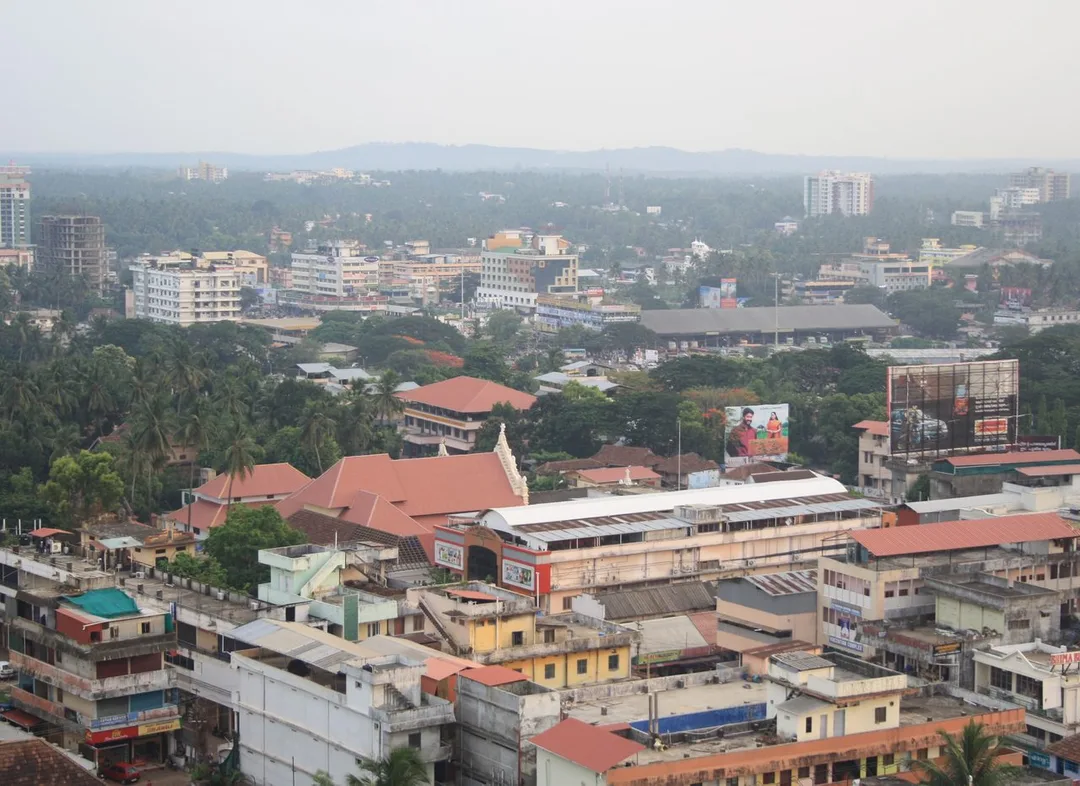
Photo: Jpullokaran · CC BY-SA 3.0, cropped · via Wikimedia Commons
Trusted by 200+ organisations across India & overseas — including





























Thrissur's larger organisations own a surprising quantity of things. A finance company equips each new branch with safes, counters, computers, cameras and a generator. A hospital buys monitors, ventilators, beds and analysers year after year. A tile works at Pudukad or Amballur has presses, kilns and moulds that decide whether production runs tomorrow. The purchase is recorded, depreciated by formula, and then forgotten until an auditor asks to see it.
Asset management and tracking on ERPNext keeps one record per asset from purchase to disposal: category, location, custodian, warranty, insurance and documents. Depreciation is calculated automatically and posted to the ledger. Maintenance schedules, AMC contracts and breakdowns are logged against the asset, and barcode or RFID tags make physical verification a matter of scanning.

Items move between branches, get replaced or are quietly scrapped, and the register is never told. Tagging each asset and recording transfers as documents keeps location and custodian current, and a scan-based verification lists exactly what is missing, surplus or in the wrong place.
A hospital's equipment and a factory's kiln both fail at the worst time when servicing is left to memory. Preventive maintenance schedules generate tasks ahead of the due date, record what was done and by whom, and build a history that informs the repair-or-replace decision.
Organisations pay for repairs that were under warranty and renew service contracts on equipment already disposed of. Holding warranty and AMC dates on the asset record, with reminders, puts a stop to both.
Case studies

DSV Global Transport and Logistics
DSV — ERPNext Asset Tagging Cut Untraceable Assets 21%

Nael General Contracting LLC
Nael General Contracting — One ERPNext System Cut Procurement Cycle Time 35%

Dumas Bakes N Meals Private Limited
Dumas Bakes N Meals — ERPNext Lifted On-Time Deliveries by Over 40%
An example
A finance company headquartered in Thrissur is verifying assets across its branches before the year-end audit. On a Tuesday afternoon the internal auditor reaches the Chavakkad branch with a handheld scanner. Every safe, counter, computer, camera and UPS carries a tag from last year's exercise. She walks the rooms, scans as she goes, and the app compares what it reads against the register for that branch. A printer shows as present here but registered to Irinjalakuda; the transfer was never recorded, so she raises it on the spot and the branch manager approves it. A generator on the register is not found; it was scrapped, and a disposal entry is drafted for head office. She leaves with a list that reconciles, and the branch manager has become custodian of everything in his rooms.
The first task is a baseline. We help you plan a physical verification across your Thrissur locations, reconcile it with the existing register, and agree with your auditor how to treat the differences. Tagging follows, by barcode for most assets and RFID where volumes justify it. System configuration is done from Kochi, and we train the administrative staff who will keep the register alive afterwards.
Discovery. Your assets, locations, custodians and maintenance routine.
Blueprint and fixed scope. A clear plan, the deliverables and the timeline, agreed in writing before configuration starts.
Configuration. Asset registers, movements, custody, maintenance schedules and depreciation.
Data migration. Asset records with locations, custodians and book values.
Training, go-live and support. Your team tests on real data, we stand beside you at launch, then support continues under a plan.
The scope and timeline are agreed in writing before work starts.
Banking and financial services
Branch-wise registers for safes, IT equipment, furniture and security systems, custody assigned to the branch manager, transfers when a branch relocates, and an audit trail that satisfies internal inspection and statutory auditors.
Education and healthcare
Biomedical equipment with calibration and service schedules, asset location by ward or department, AMC contracts and vendor response recorded, and for colleges, laboratory and library assets verified department by department each year.
Tiles and ceramics
Plant and machinery records for presses, kilns and handling equipment in the district's tile works, maintenance plans tied to production hours, spare parts consumption per machine, and downtime logged so its real cost is visible.
Yes. The register is cleaned, given categories and locations, and loaded with original cost, accumulated depreciation and remaining life, so depreciation continues correctly from the cutover date. Gaps found during verification are resolved with your auditor first.
Barcode tags are inexpensive and adequate when assets are verified once or twice a year. RFID suits places with many movable items that need frequent checks. We use Zebra hardware for RFID and often recommend a mix, deciding category by category.
Yes. Straight-line and written-down-value methods are supported, with rates and useful lives set per asset category. Depreciation entries are posted automatically, and the asset's book value always agrees with the general ledger.
After a first conversation about your assets, sites and how they are tracked today, we agree the scope and send you a written quotation. The price, the deliverables and the timeline are fixed against that scope before any work starts, so nothing grows without your sign-off.
You speak to someone who does this work, not a call centre. They ask about what you track, across how many sites, and how it is recorded now. If it looks like a fit, we agree the scope and put it in writing, with the timeline, before any work starts. If it does not, we tell you.
Government Engineering College, Thrissurinstitution
engineering college at Ramavarmapuram founded in 1957, the state's second-oldest public engineering institute
A campus with laboratories, workshops and hostels holds instruments, machines and furniture that a tagged register can verify department by department.
Source: en.wikipedia.orgTiles Industry Cluster along the west coast, Thrissurcluster
One of the earliest DC-MSME clusters (1998-99); a clay-processing and testing common facility centre followed in 2006-07, and a terra tiles CFC is listed under MSE-CDP
Tile factories in the cluster run presses, kilns and moulds whose breakdowns stop production, so maintenance schedules and spare-part histories matter as much as depreciation.
Source: dcmsme.gov.inThrissur Municipal Corporationlocal body
A corporation owns vehicles, pumps, streetlights and buildings across its wards, and a location-based register with custodians answers audit queries paper files cannot.
Industrial Development Plots at Athani and Kunnamkulampark
Two DIC-era industrial development plots; the Athani plot grew up around a steel and tools unit with a ring of auxiliary units
The steel and tools unit at Athani and the workshops around it depend on machine tools whose service history and insurance are worth tracking on the asset itself.
Source: thrissurcorporation.lsgkerala.gov.inPlaces and organisations are named for local context only. Acube Innovations is not affiliated with or endorsed by them.
Get a clear plan, an honest timeline, and a fixed scope. Talk to a real expert today — whether or not you work with us.
or write to info@acube.co
Kochi (Kadavanthra & Infopark) · Thiruvananthapuram · across India & overseas · In business since 2011