
Loading…
Loading…
Also serving Trichur
Thrissur is not a transport hub, but its timber lorries, tile delivery trucks and college buses run every day, and few owners know what each vehicle really costs them.
Official ERPNext Partner · 100+ ERP projects · Since 2011
Or call +91 62358 66111
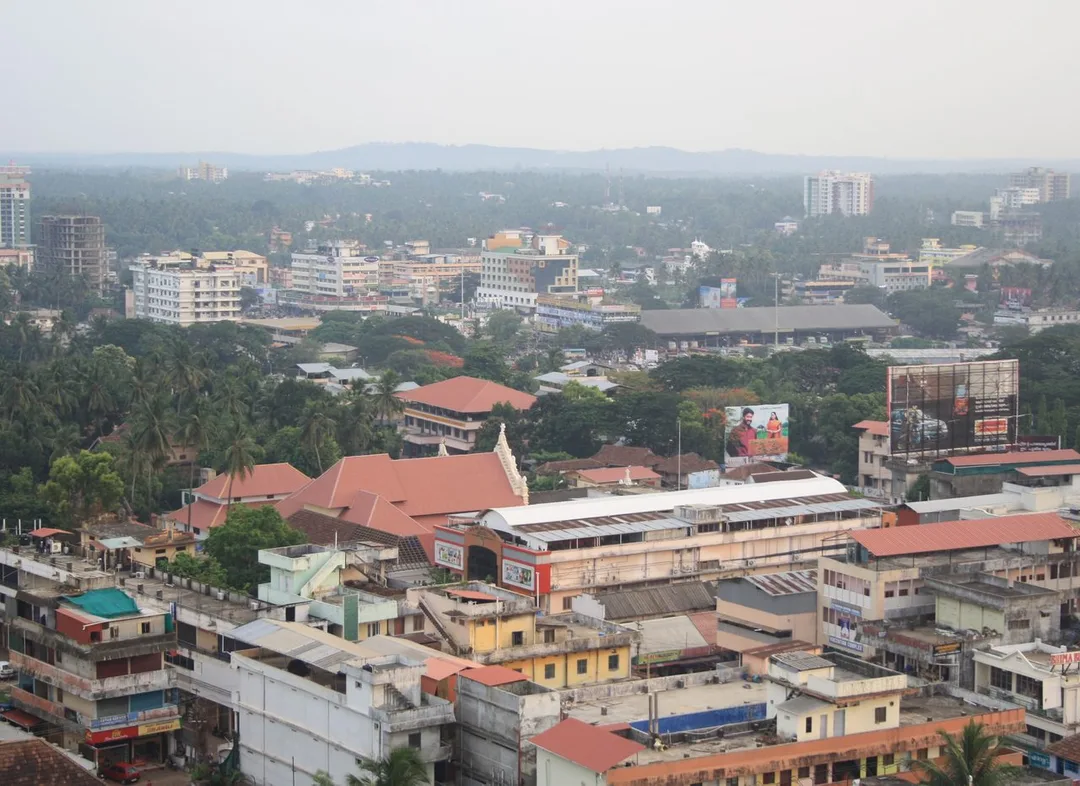
Photo: Jpullokaran · CC BY-SA 3.0, cropped · via Wikimedia Commons
Trusted by 200+ organisations across India & overseas — including






























Thrissur has few large logistics companies, and we would be misleading you to suggest otherwise. What it has is a great many businesses that run vehicles as a necessary sideline. Timber merchants at Chalakudy bring logs in and send sawn wood out. Tile makers along the Ollur belt deliver to building sites across the district. Schools and colleges operate bus fleets. Hospitals run ambulances. For these owners the fleet is a cost centre managed by a supervisor with a diary.
Fleet and dispatch management on ERPNext keeps a record for every vehicle: documents, insurance, permits, tyres and service history. Trips are planned and assigned to drivers, fuel and expenses are logged per trip, GPS devices can feed live location, and the cost of each vehicle, route and delivery is reported. All of it connects to the same accounts and stock as the main business.
Case studies

Kera Cabs
Kera Cabs — 55% of Bookings Moved Off the Phone and Into the App

Kerala State Road Transport Corporation (KSRTC)
KSRTC — ERPNext Courier System Delivered ₹1 Crore in Profit

Connect N Cabs Tours & Travels Pvt. Ltd.
Connect N Cabs — A Custom Travel ERP That Lifted Fleet Utilisation 35%
The tile showroom promises Tuesday delivery without knowing that both trucks are committed. A dispatch board showing each vehicle's planned trips lets the sales desk give a date it can keep and lets the supervisor combine nearby drops into one run.
Diesel slips and workshop bills are paid as they come. Logging fuel against odometer readings and repairs against each vehicle shows which lorry is drinking more than it should and which has reached the point where replacing it is cheaper than keeping it.
An expired fitness certificate is discovered at a check post on the highway to Palakkad. Document expiry dates in the vehicle record raise reminders weeks ahead, so renewals become routine instead of roadside emergencies.
An example
At seven on a Thursday the dispatch supervisor at a tile works in Pudukad opens the day's board. Three confirmed orders need delivery: a roofing lot to a site near Wadakkanchery, a floor-tile order to a dealer in Kodungallur on the coastal highway, and a small load to a house in Irinjalakuda. The system groups the Kodungallur and Irinjalakuda drops onto one lorry heading west and gives the Wadakkanchery run to the other. Each driver sees his trip on his phone with the delivery notes attached. The Kodungallur driver photographs the signed note at the dealer's godown and records a diesel fill on the way back; the odometer reading goes in with it. In the afternoon the sales desk, asked for a Saturday delivery towards Chalakudy, checks the board before promising it. That evening the insurance renewal reminder for the older lorry appears three weeks ahead, not at a check post.
For a business whose vehicles are a side activity, we keep the scope tight: vehicle master, trips, fuel, maintenance and costs, connected to your existing ERPNext or implemented with it. We come to Thrissur to see how dispatch is handled today and to train supervisors and drivers on the mobile screens. GPS integration, if wanted, is added once the basics are in daily use.
Discovery. Your vehicles, drivers, trips, fuel and maintenance, and how dispatch runs today.
Blueprint and fixed scope. A clear plan, the deliverables and the timeline, agreed in writing before configuration starts.
Configuration. Vehicles, trips, dispatch, fuel and maintenance logs, and trip costing.
Data migration. Vehicle and driver records, service history and running contracts.
Training, go-live and support. Your team tests on real data, we stand beside you at launch, then support continues under a plan.
The scope and timeline are agreed in writing before work starts.
Timber, plywood and furniture
Inbound log loads and outbound deliveries planned per lorry, driver advances and trip expenses settled on return, freight cost added to the landed cost of timber, and hired vehicles tracked alongside owned ones.
Tiles and ceramics
Delivery trips built from confirmed sales orders, loads grouped by area from the godown, proof of delivery captured on the driver's phone, and breakage in transit recorded against the trip.
Education and healthcare
Bus routes and stops with assigned drivers and attendants, vehicle compliance documents tracked for every bus, maintenance scheduled in vacation periods, and ambulance usage logged by call for hospital fleets.
If those six lorries carry most of your sales, probably yes. The aim is not sophistication. It is knowing cost per trip, keeping documents current and giving customers reliable dates. For a very small fleet we sometimes recommend starting with just the vehicle and expense records.
Often it can, if the device provider offers a data interface. Location and distance then flow into the trip record. We check the provider's interface during scoping. If it is closed, the fleet module still works fully with manually entered odometer readings.
It helps but is not essential. With a phone, a driver can mark trip start, delivery and expenses as they happen. Without one, the supervisor enters the trip sheet on return. Many fleets begin with supervisor entry and move drivers to the phone gradually.
After a first conversation about your fleet size, the trips you run and how dispatch and costing work today, we agree the scope and send you a written quotation. The price, the deliverables and the timeline are fixed against that scope before any work starts, so nothing grows without your sign-off.
You speak to someone who does this work, not a call centre. They ask about your fleet, how trips are assigned and where costs are hard to see. If it looks like a fit, we agree the scope and put it in writing, with the timeline, before any work starts. If it does not, we tell you.
National Highway 544 (Mannuthy-Chalakudy corridor)transport
the Kochi-Coimbatore highway through the district, passing Chalakudy and Mannuthy near the city
The district's main trunk road, on which timber, tile and plywood loads move between Chalakudy, the city and the Palakkad side, and where check-post document checks catch lapsed permits.
Source: en.wikipedia.orgNational Highway 66 via Kodungallurtransport
coastal highway linking Kodungallur to Kochi (36 km) and the Malabar coast
The coastal route to Kochi and the Malabar coast along which coastal dealers are served, so delivery runs westward need grouping by area to make each trip pay.
Source: en.wikipedia.orgChalakudy timber trademarket
long-standing timber mart with sawmills, plywood and woodcraft units; Thrissur and Chalakudy are the district's main timber marts
Sawmills and timber marts here run inbound log lorries and outbound deliveries daily, with driver advances and freight that belong in the landed cost of the wood.
Source: en.wikipedia.orgGuruvayur railway stationtransport
terminus of the Thrissur-Guruvayur branch with passenger trains to Thrissur and Ernakulam and an express to Chennai
The branch-line terminus brings pilgrims into a town whose hotels, halls and institutions run their own vehicle fleets for guests, staff and supplies.
Source: en.wikipedia.orgPlaces and organisations are named for local context only. Acube Innovations is not affiliated with or endorsed by them.
Get a clear plan, an honest timeline, and a fixed scope. Talk to a real expert today — whether or not you work with us.
or write to info@acube.co
Kochi (Kadavanthra & Infopark) · Thiruvananthapuram · across India & overseas · In business since 2011