
Loading…
Loading…
Also serving Madras
Standard ERPNext rarely matches how a Chennai electronics plant, a container freight station or an OMR software firm really works; customisation closes that gap without breaking upgrades.
Official ERPNext Partner · 100+ ERP projects · Since 2011
Or call +91 62358 66111
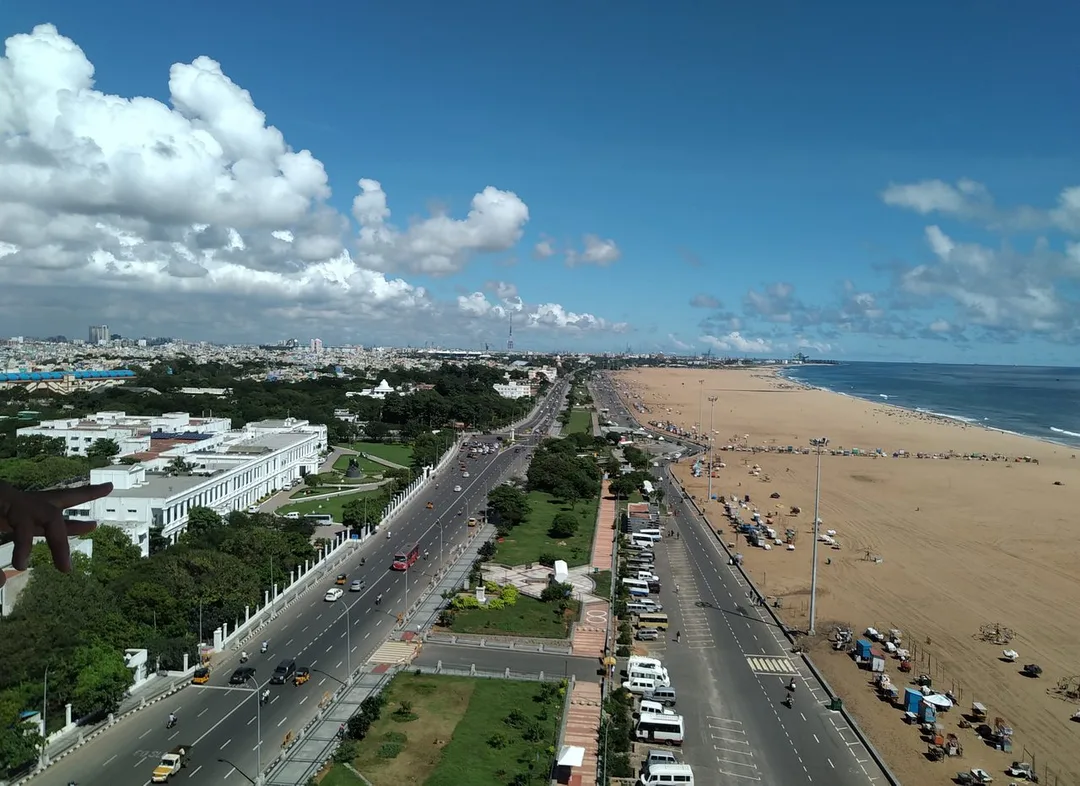
Photo: SlowPhoton · CC BY-SA 4.0, cropped · via Wikimedia Commons
Trusted by 200+ organisations across India & overseas — including























Electronics manufacturing
Serial-number capture at assembly, test and packing, rework loops recorded against the unit, customer-specific labels and packing lists, and traceability from a complaint back to the component lot.
Ports & logistics
A job or container doctype that gathers CHA, transport, storage and handling charges from Chennai and Ennore port movements, raises the customer invoice with the right GST treatment, and shows margin per job before the month closes.
IT & software services
Client-side timesheet approval, milestone and retainer billing, multi-currency invoices for export of services, and utilisation dashboards by project and person, for Sholinganallur and Taramani firms that bill by the hour.
Most ERPNext installations in Chennai get most of the way with standard features. The rest is where the business is different. An assembler in the Guindy Electronic Complex Module wants serial numbers captured at three stages. A forwarder at Chennai Port wants a job card gathering every charge on a container. An OMR software firm wants timesheets approved by the client before billing.
Customisation means building those pieces inside ERPNext: custom doctypes, fields, print formats, workflows, reports, dashboards and integrations. We write them as separate Frappe apps, so your changes sit apart from the core and survive version upgrades. Work is scoped in writing first, built on a staging copy, and released only after your users have signed off.

Case studies
Della Fashions
Della Fashions — ERPNext POS Made Checkout 60% Faster Across Every Outlet

DSV Global Transport and Logistics
DSV — ERPNext Asset Tagging Cut Untraceable Assets 21%

Red Lines International Services LLC
Red Lines International — ERPNext Cut Empty Running 80% Across a GCC Fleet
We often meet Madras firms whose earlier vendor edited ERPNext's own code. It worked until the next upgrade, which either failed or wiped the change. Moving those edits into a proper custom app is tedious, but it is the only way the system can be upgraded safely again.
When the standard report does not show what the owner wants, someone exports and rebuilds it by hand each week. A script report written once, such as container-wise margin or line-wise rejection, removes that routine and gives everyone the same answer.
Customer portals, weighbridges, barcode printers and bank files all hold data the ERP needs. Without integration, clerks retype it. We connect them through ERPNext's API so the entry happens once, at source, and errors surface as exceptions.
An example
A customs broker's back office near Chennai Port opens the morning's arrivals. Each container gets a job card in ERPNext, a custom doctype the standard product never had. The clerk keys the bill of lading number and the shipping-line invoice; CHA charges, transport to a Madhavaram freight station and storage days flow into the same card as the day goes on. When the trailer clears the gate, the transporter's rate is pulled from the contract and the customer invoice is drafted with the right GST treatment for each charge. In the afternoon the manager opens a script report showing margin per job for the week and notices one lane that has been losing money since the detention rules changed. Nobody has opened a spreadsheet all day.
Customisation suits remote delivery well. We take requirements over calls and screen shares, write a short specification with mock-ups, and build on a staging server you can log into from Chennai at any time. For larger pieces, such as a shop-floor screen or a gate-entry module, we visit the site first to watch the process, then return when users are trained.
Understand the real need. We sit with the people who feel the gap and map the actual process.
Design and fixed scope. A solution design, an honest timeline and agreed deliverables, in writing.
Build the upgrade-safe way. Custom apps, fields and APIs, never core edits, documented and version-controlled.
Test on real data. Validated against your scenarios in a safe environment first.
Deploy and support. Rolled out cleanly to production, then kept healthy under support.
The scope and timeline are agreed in writing before work starts.
Not if they are built correctly. We keep every change in a separate app, avoid touching core files, and test against the new version on staging before production is upgraded. Customisations written this way have moved across several major versions without being rewritten.
Yes. We begin with a code and configuration review, list what is safe, what is fragile and what should be rebuilt, and agree priorities with you. Many systems we look after were first set up by someone else.
Usually, yes. If the portal offers an API or accepts file uploads, schedules can be pulled in and dispatch advice or invoices pushed back. Where it allows neither, we build an import screen that takes its downloaded file, which still saves most of the retyping.
After a first conversation about the gap, the process around it and your ERPNext version, we agree the scope and send you a written quotation. The price, the deliverables and the timeline are fixed against that scope before any work starts, so nothing grows without your sign-off.
You speak to someone who does this work, not a call centre. They ask about what the system does not do today, who feels it and how you work around it. If it looks like a fit, we agree the scope and put it in writing, with the timeline, before any work starts. If it does not, we tell you.
Guindy Electronic Complex Modulepark
Ready-built modules for electronics units inside the Guindy estate, administered by the same SIDCO branch.
Ready-built SIDCO modules for electronics units inside the Guindy estate. Small assemblers here need serial capture, revision control and customer labels that standard manufacturing does not ship with.
Source: tansidco.orgChennai Porttransport
major seaport under the Ministry of Ports, Shipping and Waterways; 27 berths across three docks, two container terminals, plus automobiles, POL and general cargo; second-largest container port in India
Two container terminals across three docks. Every forwarder and CHA around it lives on a job-costing card, the most common piece of custom work we build for logistics firms.
Source: en.wikipedia.orgPrinting cluster, Chennaicluster
Diagnostic-study cluster (2006-07) under MSME-DI Chennai.
A diagnostic-study cluster under MSME-DI Chennai. Print and packaging shops estimate by paper, plate and impression count, which calls for a custom estimator feeding the standard quotation.
Source: dcmsme.gov.inPlaces and organisations are named for local context only. Acube Innovations is not affiliated with or endorsed by them.
Everything about ERPNext Customisation All services in Chennai
More services in Chennai
Get a clear plan, an honest timeline, and a fixed scope. Talk to a real expert today — whether or not you work with us.
or write to info@acube.co
Kochi (Kadavanthra & Infopark) · Thiruvananthapuram · across India & overseas · In business since 2011